
Who wrote Genesis in the Bible? Your study begins with a humble answer. Scripture strongly associates the Torah with Moses, while Genesis itself does not name its human author inside the book. Jewish and Christian tradition therefore speak of Moses as the primary author, compiler, and covenantal witness behind Genesis.
This does not mean Moses invented the stories. Genesis preserves God-given revelation, family records, ancestral memory, and covenant history, all shaped under divine inspiration to teach who God is, who humanity is, and why Israel’s story begins with creation.
Genesis Key Scripture References
| Verse | Passage Snippet | Context |
|---|---|---|
| Genesis 1:1 | “In the beginning” | Creation opens the book |
| Genesis 2:4 | “generations of the heavens” | First תּוֹלְדוֹת formula |
| Genesis 5:1 | “book of the generations” | Adam family record |
| Genesis 12:1 | “Go from your country” | Abram called by God |
| Genesis 15:18 | “made a covenant” | Land promise confirmed |
| Genesis 17:7 | “everlasting covenant” | Abrahamic covenant sign |
| Genesis 49:10 | “scepter shall not depart” | Judah’s royal hope |
| Exodus 17:14 | “Write this” | Moses commanded to write |
| Exodus 24:4 | “Moses wrote” | Covenant words recorded |
| John 5:46 | “he wrote of me” | Jesus links Moses to Scripture |
Genesis Bible Translation Comparison
| Verse | KJV | NIV | ESV | NASB |
|---|---|---|---|---|
| Genesis 1:1 | “In the beginning” | “In the beginning” | “In the beginning” | “In the beginning” |
| Genesis 2:4 | “generations” | “account” | “generations” | “account” |
| Genesis 5:1 | “book” | “written account” | “book” | “book” |
| Genesis 12:1 | “Get thee out” | “Go” | “Go” | “Go” |
| Genesis 15:18 | “made a covenant” | “made a covenant” | “made a covenant” | “made a covenant” |
| Genesis 17:7 | “everlasting covenant” | “everlasting covenant” | “everlasting covenant” | “everlasting covenant” |
| Exodus 24:4 | “Moses wrote” | “Moses then wrote down” | “Moses wrote down” | “Moses wrote down” |
| Luke 24:27 | “Moses” | “Moses” | “Moses” | “Moses” |
Genesis People & Characters Associated
| Person | Role | Connection |
|---|---|---|
| Moses | Prophet and lawgiver | Traditional author of Torah |
| Adam | First man | Beginning of humanity |
| Eve | Mother of living | First woman in Genesis |
| Noah | Righteous survivor | Preserved through flood |
| Abraham | Covenant patriarch | Receives land and seed promises |
| Sarah | Covenant matriarch | Mother of Isaac |
| Isaac | Promised son | Covenant line continues |
| Jacob | Israel’s ancestor | Father of twelve tribes |
| Joseph | Preserver in Egypt | Bridges Genesis to Exodus |
Genesis Original Hebrew & Greek Words
| Original Word | Transliteration | Strong’s # | Literal Meaning |
|---|---|---|---|
| בְּרֵאשִׁית | bereshit | H7225 | beginning, first |
| רֵאשִׁית | reshith | H7225 | first, chief |
| סֵפֶר | sefer | H5612 | book, writing |
| כָּתַב | kathav | H3789 | write, record |
| תּוֹלְדוֹת | toledot | H8435 | generations, records |
| בְּרִית | berit | H1285 | covenant |
| זֶרַע | zera | H2233 | seed, offspring |
| מֹשֶׁה | Mosheh | H4872 | Moses |
| Γένεσις | Genesis | G1078 | origin, birth |
Genesis Related Biblical Concepts
| Concept | Connection | Supporting Verse |
|---|---|---|
| Creation | Genesis begins with God as Creator | Genesis 1:1 |
| Image of God | Humanity’s dignity | Genesis 1:26 |
| Sabbath pattern | Creation rest | Genesis 2:2 |
| Fall | Sin enters human life | Genesis 3:6 |
| Judgment | Flood and Babel | Genesis 6:7 |
| Promise | Seed of the woman | Genesis 3:15 |
| Covenant | Abraham receives oath | Genesis 15:18 |
| Election | God chooses Abraham | Genesis 12:1 |
| Blessing | Nations blessed through seed | Genesis 12:3 |
Genesis Historical & Cultural Context
| Aspect | Detail | Biblical Source |
|---|---|---|
| Wilderness setting | Moses led Israel from Egypt | Exodus 3:10 |
| Written covenant | Moses records God’s words | Exodus 24:4 |
| Patriarchal era | Abraham, Isaac, Jacob | Genesis 12 to 36 |
| Family records | Genealogies structure Genesis | Genesis 5:1 |
| Ancient covenants | Oath and sacrifice | Genesis 15:9 |
| Tribal origins | Twelve sons of Jacob | Genesis 49 |
| Egypt connection | Joseph rises in Egypt | Genesis 41 |
| Exodus bridge | Israel grows in Egypt | Exodus 1:1 |
| Promised land | Canaan promised to seed | Genesis 17:8 |
Genesis Theological Themes
| Theme | Explanation | Scripture |
|---|---|---|
| Divine creation | God alone creates all things | Genesis 1:1 |
| Human dignity | People bear God’s image | Genesis 1:27 |
| Sin and death | Rebellion brings exile | Genesis 3:19 |
| Grace | God covers shame | Genesis 3:21 |
| Judgment | God confronts violence | Genesis 6:13 |
| Covenant promise | God binds Himself by oath | Genesis 15:18 |
| Providence | Evil is overruled for good | Genesis 50:20 |
| Messianic hope | Judah’s line receives promise | Genesis 49:10 |
Genesis Modern Application for Believers
| Area | Practice | Scripture |
|---|---|---|
| Worship | Honor God as Creator | Genesis 1:1 |
| Identity | Receive image-bearing dignity | Genesis 1:27 |
| Marriage | Value covenant union | Genesis 2:24 |
| Repentance | Take sin seriously | Genesis 3:8 |
| Faith | Trust God’s promise | Genesis 15:6 |
| Patience | Wait like Abraham | Genesis 21:2 |
| Integrity | Resist like Joseph | Genesis 39:9 |
| Forgiveness | Seek reconciliation | Genesis 50:21 |
| Hope | Believe God preserves His plan | Genesis 50:20 |
Moses, סֵפֶר Sefer, and the Question of Who Wrote Genesis in the Bible
When you ask who wrote Genesis in the Bible, the most direct biblical answer comes from the wider Torah and the New Testament. Exodus says Moses wrote covenant words, Deuteronomy speaks of Moses writing the law, and Jesus refers to Moses as a writer who testified about Him.
Genesis itself is formally anonymous. That matters. A careful Bible student should not pretend the first verse says, “Moses wrote Genesis.” Instead, the traditional view is that Moses, under the Spirit’s inspiration, gave Israel the foundational book of origins as part of the fivefold Torah.
תּוֹלְדוֹת Toledot and the Family Records Inside Genesis
The Hebrew word תּוֹלְדוֹת, toledot, often translated “generations” or “account,” is one of Genesis’s most important literary markers. It appears at turning points such as Genesis 2:4, 5:1, 6:9, 10:1, 11:10, 11:27, 25:19, 36:1, and 37:2.
This pattern suggests that Genesis is not a random collection of stories. It is a carefully shaped covenant history. Moses could have used ancient family records, oral testimony, and direct revelation, arranging them to teach Israel where they came from and why God’s promise mattered.
בְּרֵאשִׁית Bereshit and the Theology of Beginnings
The Hebrew title of Genesis comes from its first word, בְּרֵאשִׁית, bereshit, meaning “in the beginning.” The Greek title Γένεσις, Genesis, points to origin, birth, or becoming. Both titles fit the book’s purpose: it tells the beginning of creation, humanity, sin, judgment, covenant, and Israel’s family line.
For your study, this means authorship is not merely a historical curiosity. The writer of Genesis is presenting a theological foundation. Before Israel receives Sinai’s law, Israel must know the God who created the world, judged evil, called Abraham, and preserved Joseph.
Mosaic Authorship, Inspired Scripture, and Honest Questions
Some modern scholars argue that Genesis reached its final form through later editing, especially because the book includes phrases that seem to look back on earlier times. Faithful interpreters have responded in different ways, including limited later editorial updates within a fundamentally Mosaic Torah.
A reverent answer can hold both humility and conviction. Genesis is God-breathed Scripture. Moses stands as the primary covenantal figure associated with the Torah. Later servants of God may have preserved or updated small details, but the book’s authority rests in the Lord who speaks through Scripture.
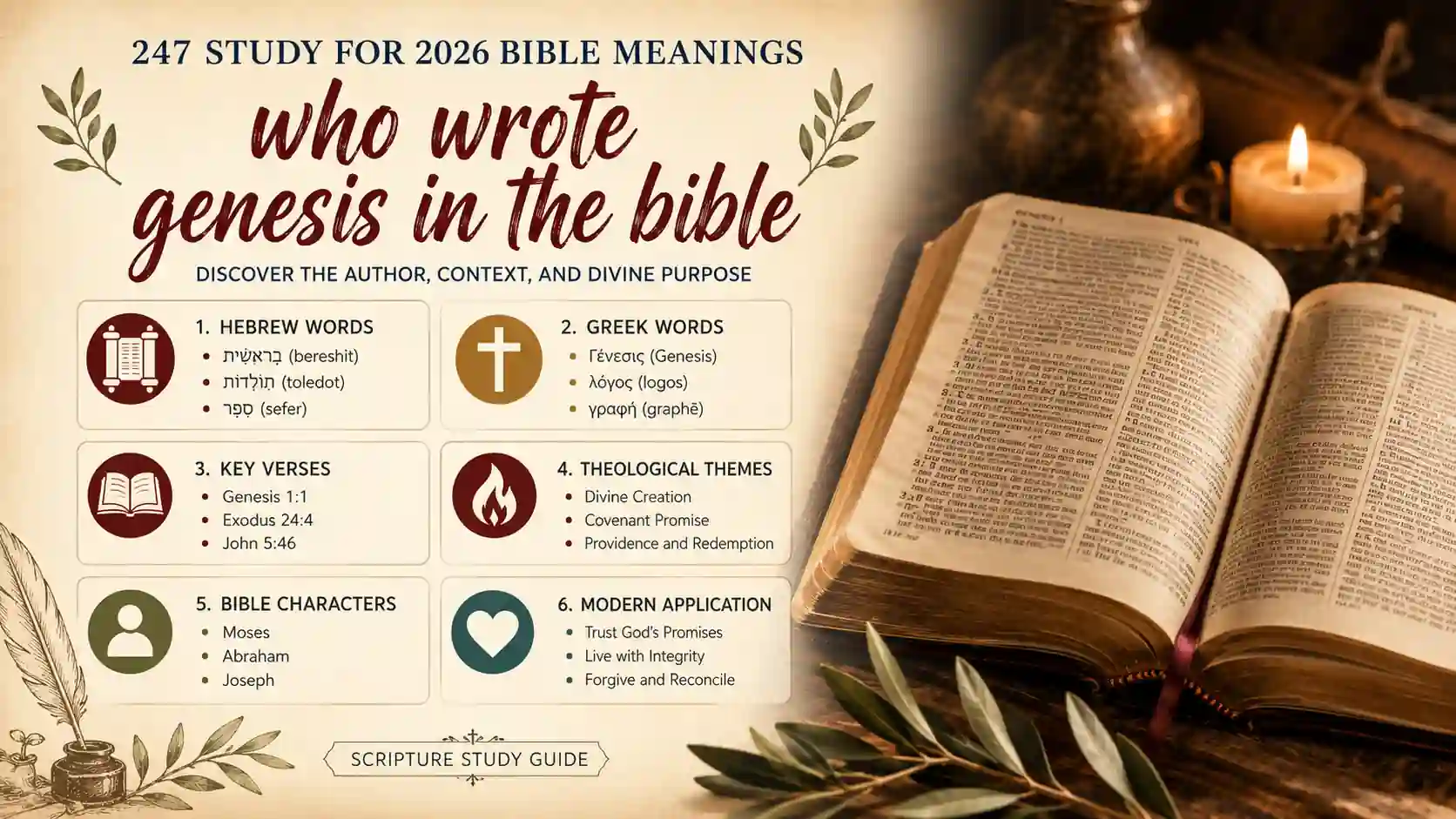
Genesis Authorship Questions Bible Students Ask
Does Genesis ever directly say Moses wrote it?
No. Genesis is anonymous, but the wider Torah and Jesus’ words strongly associate Moses with the Law.
Why does תּוֹלְדוֹת, toledot, matter for Genesis authorship?
It shows Genesis is structured around real family records, generations, and covenant history.
Does Γένεσις, Genesis, mean the same thing as בְּרֵאשִׁית, bereshit?
Not exactly. Bereshit means “in the beginning,” while Genesis means “origin” or “birth.”
How can Moses write about events before his lifetime?
He could write by divine revelation, inherited records, oral history, or a combination guided by God.
Does believing Moses wrote Genesis require ignoring later editorial details?
No. Many believers affirm Mosaic authorship while allowing minor inspired preservation or updating.