
What does Daniel mean in the Bible? The Hebrew name דָּנִיֵּאל (Daniyyel) is commonly understood as “God is my judge.” That meaning beautifully fits the biblical Daniel, a faithful Judean exile who served in foreign courts while entrusting his reputation, safety, and future to God.
Yet Daniel is more than a meaningful name. His story joins exile, prayer, divine wisdom, courageous faithfulness, judgment, prophecy, and the everlasting kingdom of God. As you study Daniel’s name and life, you discover how Scripture presents God as the righteous Judge who remains sovereign when earthly kingdoms rise and fall.
Daniel Key Scripture References
| Verse | Passage Snippet | Context |
|---|---|---|
| Daniel 1:6 | “Daniel, Hananiah, Mishael, and Azariah” | Daniel appears among Judean exiles selected for royal training. |
| Daniel 1:8 | “Daniel purposed in his heart” | He resolves not to defile himself with the royal provisions. |
| Daniel 1:17 | “knowledge and skill” | God grants the four Judeans wisdom, while Daniel receives insight into visions. |
| Daniel 2:20 | “wisdom and might are his” | Daniel praises God after the mystery of Nebuchadnezzar’s dream is revealed. |
| Daniel 4:27 | “break off thy sins” | Daniel courageously counsels Nebuchadnezzar after interpreting his dream. |
| Daniel 6:10 | “prayed, and gave thanks” | Daniel continues praying despite the royal decree against petitioning another god. |
| Daniel 6:22 | “My God hath sent his angel” | God preserves Daniel in the lions’ den. |
| Daniel 7:13 | “one like the Son of man” | Daniel sees a heavenly figure receiving universal dominion. |
| Matthew 24:15 | “Daniel the prophet” | Jesus explicitly names Daniel while discussing the “abomination of desolation.” |
Daniel Bible Translation Comparison
| Verse | KJV | NIV | ESV | NASB |
|---|---|---|---|---|
| Daniel 1:8 | “purposed in his heart” | “resolved not to defile himself” | “resolved that he would not defile himself” | “made up his mind” |
| Daniel 1:17 | “knowledge and skill” | “knowledge and understanding” | “learning and skill” | “knowledge and intelligence” |
| Daniel 2:20 | “wisdom and might” | “wisdom and power” | “wisdom and might” | “wisdom and power” |
| Daniel 2:21 | “removeth kings” | “deposes kings” | “removes kings” | “removes kings” |
| Daniel 6:10 | “gave thanks” | “giving thanks” | “gave thanks” | “giving thanks” |
| Daniel 6:22 | “shut the lions’ mouths” | “shut the mouths of the lions” | “shut the lions’ mouths” | “shut the lions’ mouths” |
| Daniel 7:13 | “Son of man” | “son of man” | “son of man” | “son of man” |
| Matthew 24:15 | “Daniel the prophet” | “the prophet Daniel” | “the prophet Daniel” | “Daniel the prophet” |
The wording varies slightly, but the central portrait remains consistent. Daniel is faithful under pressure, dependent upon God for wisdom, persistent in prayer, and a recipient of revelations concerning God’s rule over human kingdoms.
Daniel People and Characters Associated
| Person | Role | Connection |
|---|---|---|
| Daniel | Judean exile, wise man, prophet | Central biblical figure bearing the name. |
| Hananiah | Daniel’s companion | Faithful Judean renamed Shadrach. |
| Mishael | Daniel’s companion | Faithful Judean renamed Meshach. |
| Azariah | Daniel’s companion | Faithful Judean renamed Abednego. |
| Nebuchadnezzar | Babylonian king | Daniel interprets his dreams and serves during his reign. |
| Belshazzar | Babylonian ruler | Daniel interprets the handwriting on the wall. |
| Darius | Ruler in Daniel 6 | Daniel serves under him and survives the lions’ den. |
| Gabriel | Angelic messenger | Explains visions to Daniel in chapters 8 and 9. |
| Jehoiakim | King of Judah | His reign supplies the opening historical setting of Daniel. |
| Jesus | Messiah and teacher | Refers to Daniel in the Olivet Discourse. |
Daniel’s opening setting belongs to the Babylonian ascendancy associated with Nebuchadnezzar and Judah’s loss of political independence. Daniel 1 places him among Judeans taken to Babylon and trained for service at the royal court.
Daniel Original Hebrew and Greek Words
| Original Word | Transliteration | Strong’s # | Literal Meaning |
|---|---|---|---|
| דָּנִיֵּאל | Daniyyel | H1840 | God is my judge |
| דָּנִיֵּאל | Daniyyel | H1841 | Daniel, Aramaic form |
| דָּן | Dan | H1835 | Judge |
| דִּין | din | H1777 | Judge, plead, vindicate |
| אֵל | El | H410 | God, mighty one |
| Δανιήλ | Daniēl | G1158 | Daniel |
| בֵּלְטְשַׁאצַּר | Belteshatstsar | H1095 | Belteshazzar, Daniel’s Babylonian name |
| דִּין | din | H1780 | Judgment, legal case |
The principal Hebrew entry is Strong’s H1840, דָּנִיֵּאל (Daniyyel), traditionally analyzed in relation to judgment and אֵל (El), “God.” Strong’s consequently gives the sense “God is my judge.” The related Hebrew verb דִּין (din, H1777) carries ideas such as judging, pleading a cause, governing, and vindicating.
In the New Testament, Greek Δανιήλ (Daniēl) is Strong’s G1158, a Greek representation of the Hebrew name. Matthew 24:15 uses it when Jesus identifies “Daniel the prophet.”
Daniel Related Biblical Concepts
| Concept | Connection | Supporting Verse |
|---|---|---|
| Divine judgment | Daniel’s name points toward God as Judge. | Psalm 7:8 |
| Divine sovereignty | God changes times and removes kings. | Daniel 2:21 |
| Wisdom | Daniel’s insight ultimately comes from God. | Daniel 2:20-23 |
| Faithfulness | Daniel refuses compromising defilement. | Daniel 1:8 |
| Prayer | Daniel maintains disciplined prayer. | Daniel 6:10 |
| Providence | God grants Daniel favor and understanding. | Daniel 1:9, 17 |
| Kingdom | God establishes an indestructible kingdom. | Daniel 2:44 |
| Judgment of empires | Earthly kingdoms answer to God. | Daniel 5:26-28 |
| Son of Man | Daniel sees everlasting dominion given to this figure. | Daniel 7:13-14 |
| Resurrection | Daniel anticipates awakening from death. | Daniel 12:2 |
Daniel’s name should therefore not be treated as an isolated word definition. “God is my judge” resonates with a book in which kings are repeatedly weighed, kingdoms are judged, faithful servants are vindicated, and God’s final dominion stands above every temporary empire.
Daniel Historical and Cultural Context
| Aspect | Detail | Biblical Source |
|---|---|---|
| Homeland | Daniel comes from Judah. | Daniel 1:6 |
| Political crisis | Babylon besieges Jerusalem. | Daniel 1:1 |
| Babylonian ruler | Nebuchadnezzar dominates the opening chapters. | Daniel 1:1 |
| Exile | Judean youths are brought into Babylonian service. | Daniel 1:3-6 |
| Elite training | Daniel studies court language and literature. | Daniel 1:4-5 |
| Renaming | Daniel receives the name Belteshazzar. | Daniel 1:7 |
| Royal food | Daniel requests an alternative diet. | Daniel 1:8-16 |
| Court service | Daniel stands before the king. | Daniel 1:19 |
| Persian transition | Daniel continues into the reign of Cyrus. | Daniel 1:21 |
| Imperial administration | Daniel receives governmental responsibility. | Daniel 6:1-3 |
Daniel 1 associates the story with Jehoiakim, Nebuchadnezzar, Jerusalem, and Babylon. The wider biblical record likewise describes Babylonian campaigns that removed rulers, treasures, soldiers, craftsmen, and prominent Judeans from Jerusalem.
The exile creates the central tension of Daniel’s life. He must learn the literature of Babylon and work within imperial government without allowing imperial culture to become his ultimate spiritual authority. His Babylonian name changes, but his allegiance to Israel’s God does not.
Daniel Theological Themes
| Theme | Explanation | Scripture |
|---|---|---|
| God as Judge | Daniel’s name confesses divine judgment and vindication. | Daniel 1:6 |
| Sovereignty | Human rulers remain beneath God’s authority. | Daniel 2:20-21 |
| Revelation | God reveals mysteries inaccessible to human wisdom. | Daniel 2:27-28 |
| Faith under pressure | Obedience can continue within hostile surroundings. | Daniel 1:8 |
| Humility | Wisdom belongs ultimately to God, not Daniel. | Daniel 2:30 |
| Divine deliverance | God can rescue servants from deadly opposition. | Daniel 6:22 |
| Judgment | Proud rulers are accountable before heaven. | Daniel 5:22-28 |
| Everlasting kingdom | God’s kingdom outlasts every earthly empire. | Daniel 2:44 |
| Son of Man | Everlasting dominion is given to the heavenly figure. | Daniel 7:13-14 |
| Resurrection hope | Death does not have the final word. | Daniel 12:2-3 |
The book’s theology keeps Daniel’s personal courage in perspective. Daniel is remarkable, but God is the central actor. God gives wisdom, reveals mysteries, judges arrogance, preserves his servants, rules history, and promises a kingdom that cannot be destroyed.
That distinction matters for your study. Daniel is not primarily a manual for becoming fearless or successful. It is Scripture that calls you to trust the God whom Daniel trusted, especially when circumstances make divine sovereignty difficult to see.
Daniel Modern Application for Believers
| Area | Practice | Scripture |
|---|---|---|
| Identity | Let allegiance to God shape your deepest identity. | Daniel 1:6-8 |
| Integrity | Decide convictions before pressure intensifies. | Daniel 1:8 |
| Learning | Pursue knowledge without surrendering faithfulness. | Daniel 1:17 |
| Humility | Give God credit for wisdom and ability. | Daniel 2:27-30 |
| Work | Serve responsibly even in imperfect institutions. | Daniel 6:3-4 |
| Prayer | Build consistent prayer into ordinary life. | Daniel 6:10 |
| Courage | Obey God when faithfulness becomes costly. | Daniel 6:10-23 |
| Leadership | Speak truth respectfully to powerful people. | Daniel 4:19-27 |
| Hope | Measure earthly power against God’s kingdom. | Daniel 2:44 |
| Endurance | Live faithfully while awaiting God’s purposes. | Daniel 12:13 |
Daniel’s example does not encourage unnecessary conflict with society. He learned Babylonian material, served foreign rulers, and carried significant administrative responsibilities. His resistance became visible when obedience to political or cultural expectations would compromise faithfulness to God.
For you, that makes Daniel a compelling biblical model of conviction joined with wisdom. His life asks whether your faith remains steady when your environment changes, your beliefs become costly, or recognition from others becomes uncertain.
What Does Daniel Mean in the Bible and Why Does the Name Matter?
The most familiar meaning of דָּנִיֵּאל (Daniyyel) is “God is my judge.” The Hebrew name contains the divine element אֵל (El) and is connected lexically with judging. Strong’s H1840 itself defines the name with this judicial sense.
That meaning fits Daniel’s story remarkably well. Human authorities repeatedly evaluate Daniel, threaten him, promote him, or attempt to destroy him, but their verdicts are never ultimate. Daniel lives as though God’s assessment matters more than the changing judgment of kings.
דִּין Din and the Biblical Idea of God as Daniel’S Judge
The Hebrew verb דִּין (din, H1777) can express judging, pleading a cause, governing, or vindicating. Scripture uses this family of ideas for more than punishment. A righteous judge can defend the oppressed, settle a case, govern justly, and vindicate someone falsely accused.
This broader meaning illuminates Daniel. God does not merely judge Babylonian rulers. He also vindicates his servant. Daniel 6 provides the clearest narrative picture when political enemies condemn Daniel but God shuts the lions’ mouths and overturns, in effect, the human verdict against him.
Babylonian Exile Gives Daniel’S Name Its Living Context
Daniel’s faith develops within exile rather than comfortable independence. Daniel 1 places him among young Judeans brought into Babylonian royal service, educated in Babylonian language and literature, assigned royal provisions, and given Babylonian names. The historical setting is tied to Babylon’s expansion under Nebuchadnezzar around the beginning of the sixth century BC.
This setting makes the meaning “God is my judge” especially powerful. Daniel has lost the familiar institutions of Judah, but he has not lost God. The book teaches you that geography, political upheaval, cultural pressure, and even imposed labels cannot cancel God’s authority over his people.
Δανιήλ DaniēL Connects Daniel’S Prophecy with Jesus’ Teaching
Daniel’s name crosses from the Hebrew Scriptures into the Greek New Testament as Δανιήλ (Daniēl), Strong’s G1158. In Matthew 24:15, Jesus refers to “Daniel the prophet” while discussing the “abomination of desolation,” directing his hearers back to Daniel’s prophetic material.
This New Testament connection shows why Daniel cannot be reduced to lions, dreams, or inspiring courage. His book contributes to biblical teaching about judgment, kingdoms, tribulation, resurrection, and God’s final reign. Daniel’s personal name and prophetic message ultimately point your attention beyond Daniel himself to the God who judges rightly and rules eternally.
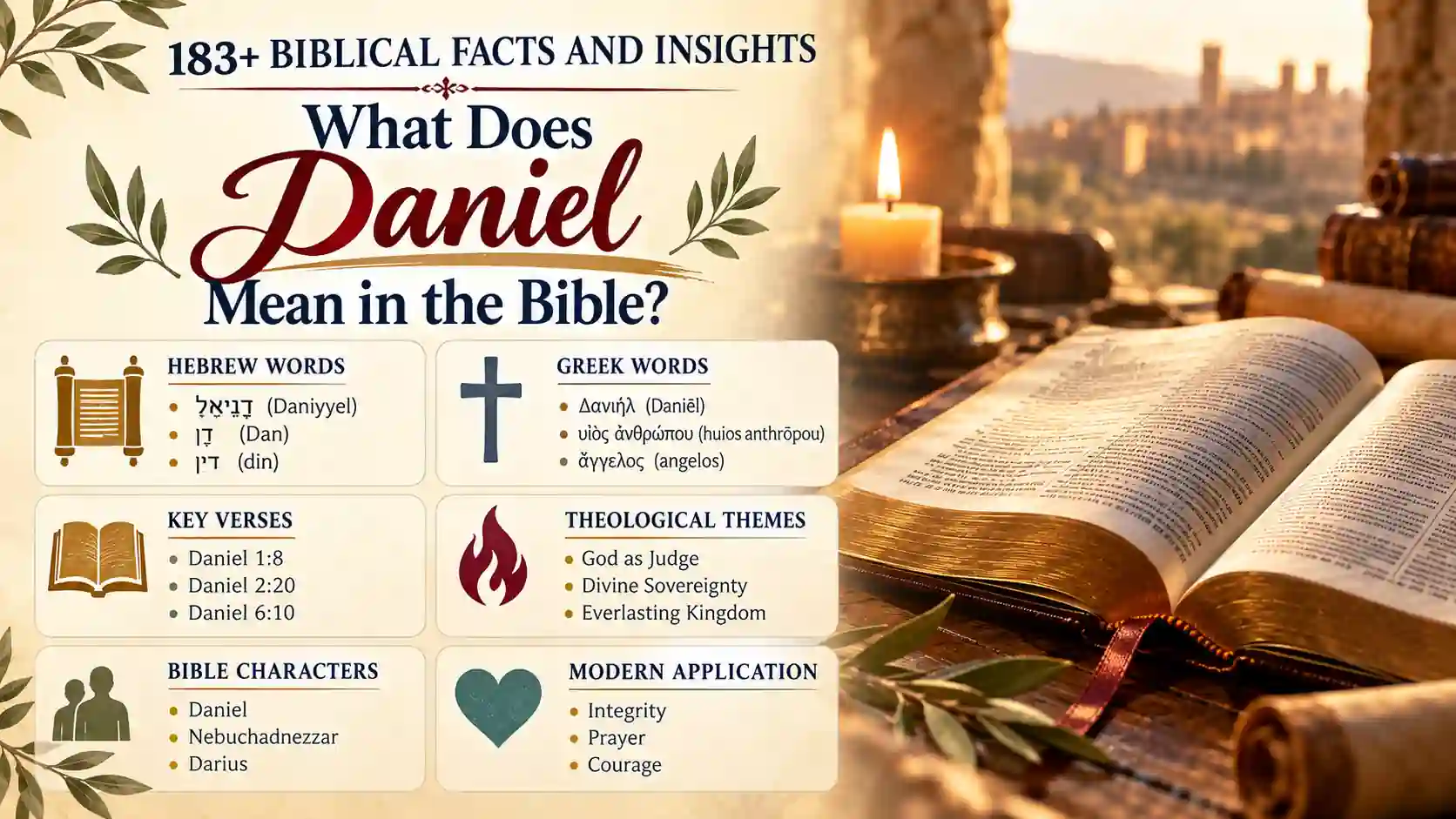
Daniel Bible Study Faqs
Does Daniel literally mean “God is my judge” in Hebrew?
Yes. דָּנִיֵּאל (Daniyyel), Strong’s H1840, is conventionally understood as “God is my judge,” with אֵל (El) referring to God.
What is the difference between דָּנִיֵּאל Daniyyel and Δανιήλ Daniēl?
דָּנִיֵּאל is the Hebrew form associated with Strong’s H1840, while Δανιήλ is its Greek New Testament form, Strong’s G1158.
Why was Daniel called Belteshazzar in Babylon?
Daniel 1:7 says the chief official gave Daniel the Babylonian name Belteshazzar as part of the new identity imposed during his royal training.
Does “God is my judge” mean only that God punishes people?
No. Biblical judgment also includes righteous decision, governance, defense, and vindication, ideas reflected in the semantic range of דִּין (din).
Why does Jesus call Daniel a prophet in Matthew 24:15?
Jesus invokes Daniel while discussing the “abomination of desolation,” connecting Daniel’s prophetic visions with his own teaching concerning coming judgment and fulfillment.