
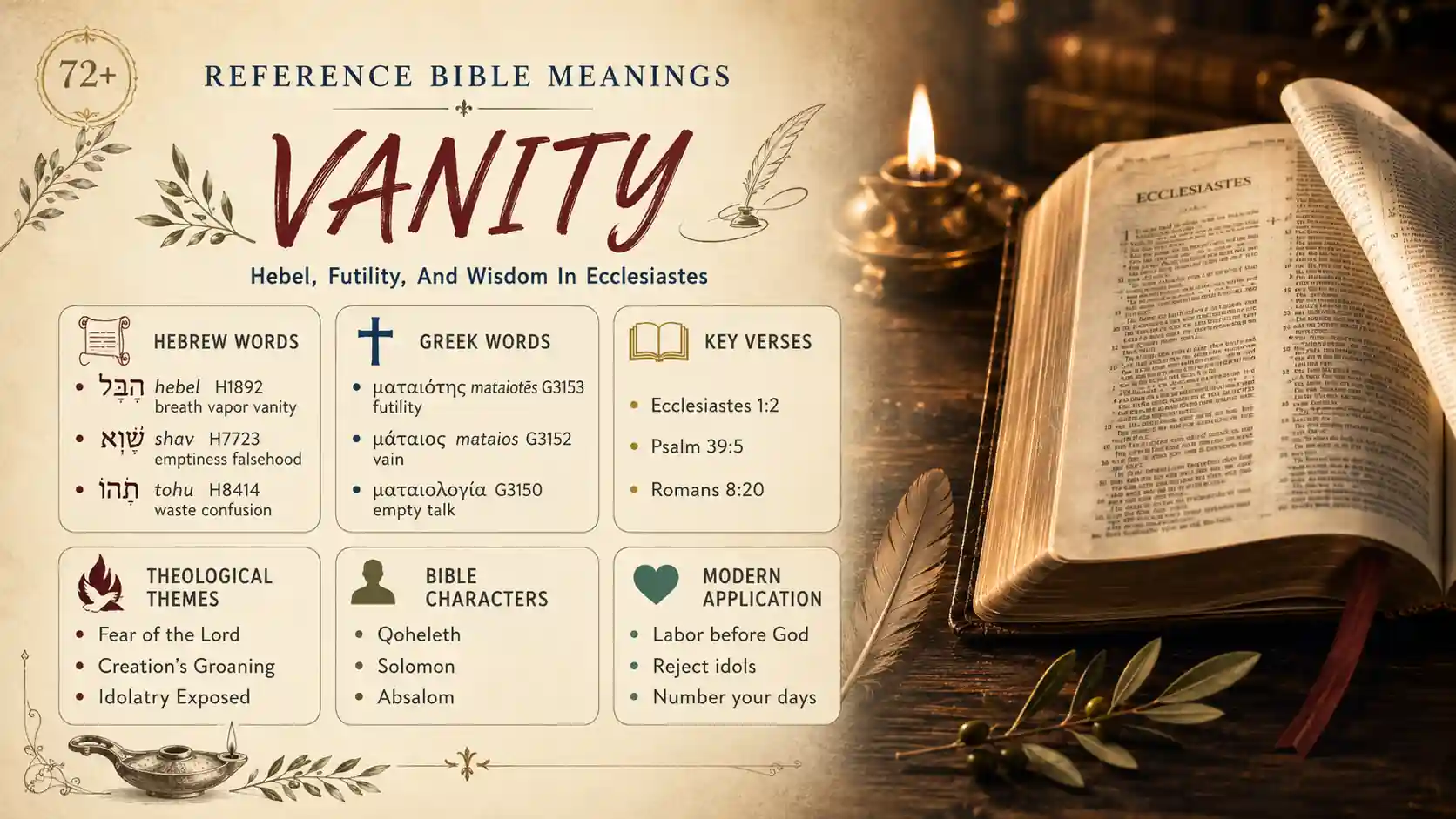
What does vanity mean in the Bible? In Scripture, vanity is not merely pride in appearance. It often means breath, emptiness, futility, falsehood, idolatry, or labor that cannot finally satisfy the soul apart from God.
The Bible uses vanity to expose the fragility of human life, the foolishness of idols, and the limits of worldly achievement. Your study should notice that the same word can describe a passing vapor in Ecclesiastes, a lying idol in Jeremiah, or useless thinking in the New Testament.
Key Scripture References on Vanity
| Verse | Passage Snippet | Context |
|---|---|---|
| Ecclesiastes 1:2 | “Vanity of vanities” | Qoheleth’s opening verdict |
| Ecclesiastes 1:14 | “All is vanity” | Human toil under the sun |
| Ecclesiastes 2:11 | “A striving after wind” | Solomon reviews pleasure and work |
| Ecclesiastes 5:10 | “Not satisfied with money” | Wealth cannot fill the heart |
| Ecclesiastes 12:8 | “All is vanity” | Final summary before fearing God |
| Psalm 39:5 | “Man is a mere breath” | Human life is brief |
| Psalm 127:1 | “In vain you rise up early” | Labor without the Lord |
| Isaiah 44:9 | “Makers of idols” | Idols are empty works |
| Romans 8:20 | “Subjected to futility” | Creation groans under the fall |
Vanity Bible Translation Comparison
| Verse | KJV | NIV | ESV | NASB |
|---|---|---|---|---|
| Ecclesiastes 1:2 | “Vanity of vanities” | “Meaningless!” | “Vanity of vanities” | “Futility of futilities” |
| Ecclesiastes 1:14 | “All is vanity” | “Everything was meaningless” | “All is vanity” | “All is futility” |
| Ecclesiastes 2:17 | “All is vanity” | “Everything is meaningless” | “All is vanity” | “Everything is futility” |
| Ecclesiastes 5:10 | “This is also vanity” | “This too is meaningless” | “This also is vanity” | “This too is futility” |
| Ecclesiastes 12:8 | “All is vanity” | “Everything is meaningless” | “All is vanity” | “All is futility” |
| Psalm 39:5 | “Altogether vanity” | “But a breath” | “A mere breath” | “All mankind is mere breath” |
| Psalm 60:11 | “Vain is the help of man” | “Human help is worthless” | “Vain is the salvation of man” | “Rescue by man is worthless” |
| Jeremiah 10:15 | “They are vanity” | “They are worthless” | “They are worthless” | “They are worthless” |
| Romans 8:20 | “Subject to vanity” | “Subjected to frustration” | “Subjected to futility” | “Subjected to futility” |
People and Characters Associated with Vanity
| Person | Role | Connection |
|---|---|---|
| Qoheleth | Teacher in Ecclesiastes | Names life under the sun as הֶבֶל |
| Solomon | King of Israel | Wealth, wisdom, pleasure tested |
| Adam | First man | Fall brings death and futility |
| Eve | First woman | Desire turned toward forbidden gain |
| Babel builders | United rebels | Human glory without God collapses |
| Absalom | David’s son | Beauty and ambition end in ruin |
| Nebuchadnezzar | Babylonian king | Pride humbled by God |
| Rich fool | Parable figure | Wealth stored, soul unready |
| Pharisee in Luke 18 | Religious example | Self-exaltation exposed |
Original Hebrew and Greek Words for Vanity
| Original Word | Transliteration | Strong’s # | Literal Meaning |
|---|---|---|---|
| הֶבֶל | hebel | H1892 | breath, vapor, vanity |
| שָׁוְא | shav | H7723 | emptiness, falsehood |
| רִיק | riq | H7385 | empty, vain |
| תֹּהוּ | tohu | H8414 | waste, confusion |
| אָוֶן | aven | H205 | trouble, wicked emptiness |
| ματαιότης | mataiotēs | G3153 | futility, vanity |
| μάταιος | mataios | G3152 | useless, vain |
| ματαιολογία | mataiologia | G3150 | empty talk |
| ματαιολόγος | mataiologos | G3151 | vain talker |
Related Biblical Concepts on Vanity
| Concept | Connection | Supporting Verse |
|---|---|---|
| Idolatry | Empty gods cannot save | Jeremiah 10:15 |
| Mortality | Human life is breath | Psalm 39:5 |
| Pride | Self-glory fades | Daniel 4:37 |
| Greed | Wealth cannot satisfy | Ecclesiastes 5:10 |
| False worship | Lips without heart | Matthew 15:9 |
| Fallen creation | World subjected to futility | Romans 8:20 |
| Empty speech | Words without truth | Titus 1:10 |
| Labor | Work apart from God fails | Psalm 127:1 |
| Wisdom | Human wisdom has limits | Ecclesiastes 1:18 |
Historical and Cultural Context of Vanity
| Aspect | Detail | Biblical Source |
|---|---|---|
| Israelite poetry | Breath imagery teaches brevity | Psalm 39:5 |
| Wisdom literature | Tests life by fear of God | Ecclesiastes 12:13 |
| Royal luxury | Kings had wealth and projects | Ecclesiastes 2:4 |
| Ancient labor | Fields and houses needed toil | Ecclesiastes 2:18 |
| Idol making | Craftsmen shaped powerless gods | Isaiah 44:9 |
| Covenant worship | Empty ritual rebuked | Isaiah 1:13 |
| Exile setting | False gods judged as worthless | Jeremiah 10:15 |
| Greco-Roman thought | Nations walk in futility | Ephesians 4:17 |
| Early churches | Empty talk threatened doctrine | Titus 1:10 |
Theological Themes of Vanity
| Theme | Explanation | Scripture |
|---|---|---|
| Creation’s groaning | Sin wounds the world | Romans 8:20 |
| Fear of the Lord | God gives final meaning | Ecclesiastes 12:13 |
| Judgment | Deeds are weighed by God | Ecclesiastes 12:14 |
| Worship | Idols are empty rivals | Isaiah 44:9 |
| Providence | Labor needs God’s blessing | Psalm 127:1 |
| Humility | Human life is brief | Psalm 39:5 |
| Christ’s resurrection | Faith is not vain | 1 Corinthians 15:14 |
| Renewal of mind | Futile thinking is healed | Ephesians 4:17 |
| Sound speech | Truth replaces empty talk | Titus 1:10 |
Modern Application for Believers on Vanity
| Area | Practice | Scripture |
|---|---|---|
| Work | Labor before God | Psalm 127:1 |
| Money | Resist endless craving | Ecclesiastes 5:10 |
| Worship | Reject functional idols | Isaiah 44:9 |
| Speech | Avoid empty talk | Matthew 12:36 |
| Time | Number your days | Psalm 90:12 |
| Suffering | Hope in redemption | Romans 8:20 |
| Ambition | Seek God’s kingdom | Matthew 6:33 |
| Doctrine | Hold sound teaching | Titus 1:9 |
| Resurrection hope | Trust Christ’s victory | 1 Corinthians 15:58 |
הֶבֶל Reveals the Vapor Like Nature of Life Under the Sun
The Hebrew word הֶבֶל, transliterated hebel, is the dominant word behind “vanity” in Ecclesiastes. It can mean breath, vapor, or mist. The point is not always that life is worthless. It is that life is brief, elusive, and impossible to master by human strength.
Ecclesiastes keeps saying “under the sun” because it studies life as experienced in a fallen world. Wisdom, pleasure, labor, money, and reputation can be real gifts, yet none can bear the weight of being your savior. Vanity names the ache of created things when they are treated as ultimate things.
What Does Vanity Mean in the Bible When Ecclesiastes Says All Is Vanity
When Ecclesiastes says “all is vanity,” it is not preaching despair. The book is pressing you toward reverent realism. Life is filled with beauty, but also death. Work can be fruitful, but another may inherit it. Wisdom is better than folly, but even the wise die.
That tension is why Ecclesiastes ends with fear God and keep his commandments. Vanity is not solved by pretending the world is easy to explain. It is answered by receiving life from God’s hand, enjoying his gifts with gratitude, and remembering that every deed comes before him.
שָׁוְא And the Vanity of Idols, Lies, and False Worship
Another Hebrew word behind the idea of vanity is שָׁוְא, shav. It often carries the sense of emptiness, falsehood, or worthlessness. In the commandment against taking the Lord’s name in vain, the issue is not merely profanity. It is treating God’s holy name as empty, false, or useful for selfish purposes.
The prophets also connect vanity with idolatry. Isaiah mocks the craftsman who cuts wood, warms himself with part of it, and makes a god from the rest. Jeremiah calls idols worthless because they cannot speak, save, judge, or give life. Vanity is worship misplaced.
ματαιότης And New Testament Futility without Christ
The Greek word ματαιότης, mataiotēs, appears in Romans 8:20, where creation is subjected to futility. Paul is not saying creation is evil. He is saying the created order now groans beneath corruption, waiting for the freedom that belongs to the children of God.
The New Testament also uses related words for vain thinking, vain worship, vain talk, and vain faith. Yet it gives a sharper hope. If Christ has not been raised, faith is vain. But because Christ is risen, your labor in the Lord is not vain. Resurrection turns vanity into steadfast hope.
FAQ on Vanity in the Bible
Does הֶבֶל mean meaningless or vapor?
It can carry both ideas, but “vapor” helps you feel its image of brevity, elusiveness, and frustration.
Why do some translations say vanity while others say futility?
“Vanity” preserves the traditional wording, while “futility” often clarifies the sense of frustration in context.
Is Ecclesiastes 1:2 teaching that life has no value?
No, it teaches that life apart from the fear of God cannot give lasting satisfaction or final control.
How is שָׁוְא connected to taking God’s name in vain?
שָׁוְא points to emptiness or falsehood, so the command warns against using God’s name falsely or lightly.
How can a believer avoid vanity today?
Receive created gifts with gratitude, reject idols, speak truthfully, and labor in the risen Lord.