
What does wrath mean in the Bible? Scripture presents wrath as a settled, morally righteous response to evil, not an uncontrolled outburst or personal irritation. Biblical wrath can describe human anger, governmental judgment, or, most significantly, God’s holy opposition to sin.
Your study must therefore consider each passage carefully. Hebrew and Greek use several words translated “wrath,” each contributing ideas such as burning heat, overflowing indignation, judicial opposition, and passionate judgment. Together, they reveal both the seriousness of rebellion and the astonishing grace offered through Jesus Christ.
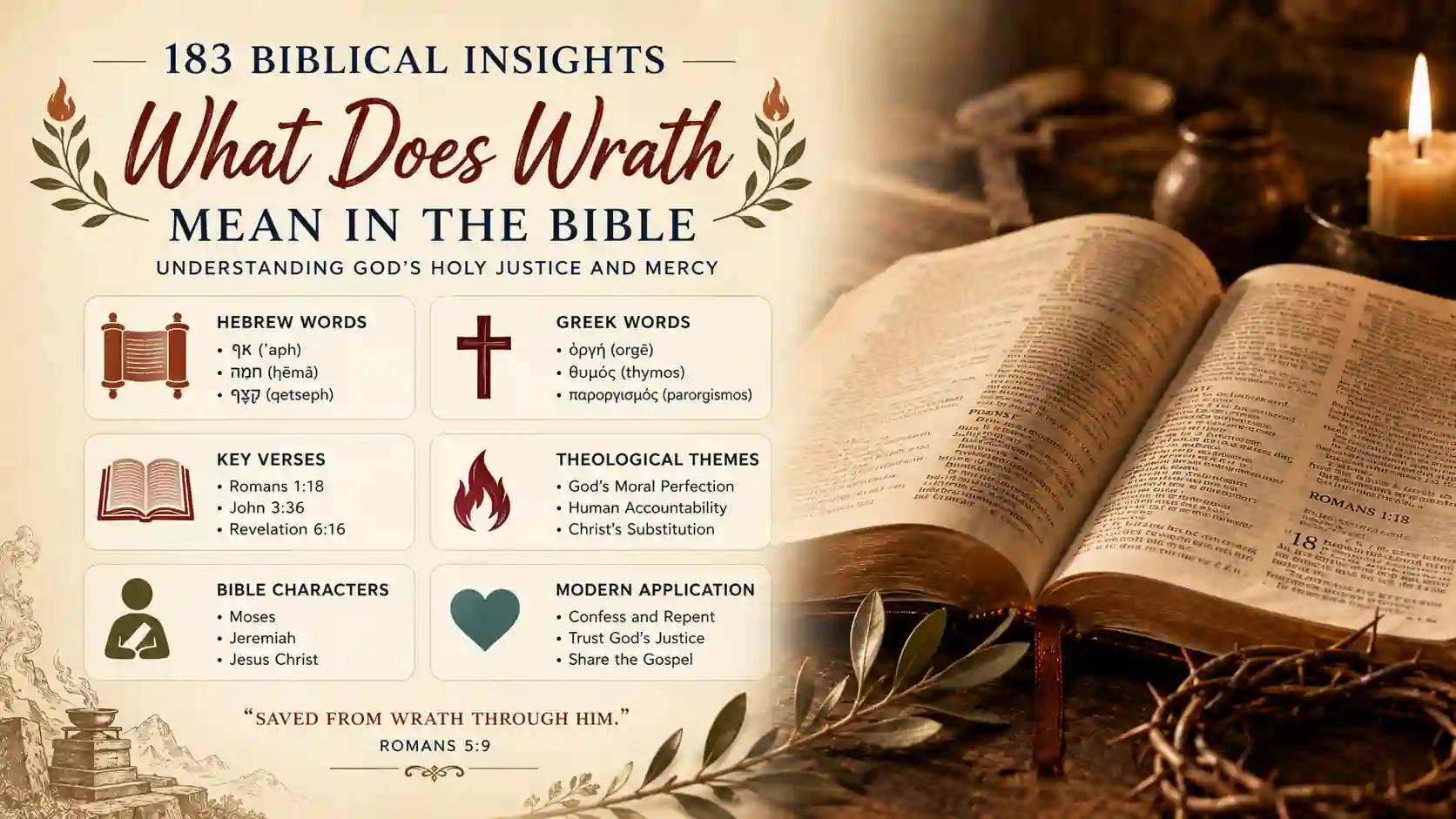
Wrath Key Scripture References
| Verse | Passage Snippet | Context |
|---|---|---|
| Exodus 32:10 | “My wrath may wax hot” | Israel worships the golden calf |
| Psalm 2:5 | “Speak unto them in his wrath” | God confronts rebellious nations |
| Isaiah 13:9 | “Cruel both with wrath” | Babylon faces the day of the Lord |
| Nahum 1:2 | “The Lord revengeth” | Nineveh receives covenant judgment |
| John 3:36 | “Wrath of God abideth” | Unbelief leaves humanity under judgment |
| Romans 1:18 | “Wrath of God is revealed” | God opposes suppressed truth |
| Romans 5:9 | “Saved from wrath through him” | Christ’s blood justifies believers |
| Revelation 6:16 | “Wrath of the Lamb” | Humanity faces the enthroned Christ |
Wrath Bible Translation Comparison
| Verse | KJV | NIV | ESV | NASB |
|---|---|---|---|---|
| Psalm 2:5 | “his wrath” | “his wrath” | “his wrath” | “His fury” |
| Nahum 1:2 | “furious” | “filled with wrath” | “wrathful” | “wrathful” |
| John 3:36 | “abideth on him” | “remains on them” | “remains on him” | “abides on him” |
| Romans 1:18 | “is revealed” | “is being revealed” | “is revealed” | “is revealed” |
| Romans 2:5 | “treasurest up” | “storing up” | “storing up” | “storing up” |
| Romans 5:9 | “saved from wrath” | “saved from God’s wrath” | “saved by him from wrath” | “saved from wrath” |
| Ephesians 2:3 | “children of wrath” | “deserving of wrath” | “children of wrath” | “children of wrath” |
| Revelation 6:16 | “wrath of the Lamb” | “wrath of the Lamb” | “wrath of the Lamb” | “wrath of the Lamb” |
Wrath People and Characters Associated
| Person | Role | Connection |
|---|---|---|
| Moses | Covenant mediator | Intercedes when wrath threatens Israel |
| Aaron | High priest | Makes atonement during divine judgment |
| David | King and psalmist | Appeals for mercy rather than wrath |
| Josiah | Reforming king | Responds to wrath announced in the Law |
| Jeremiah | Prophet of Judah | Warns Jerusalem of coming judgment |
| Nahum | Prophet to Nineveh | Proclaims God’s wrath against oppression |
| John the Baptist | Forerunner of Christ | Warns about wrath to come |
| Jesus Christ | Savior and Judge | Bears wrath and executes final judgment |
| Paul | Apostle to the Gentiles | Explains wrath, justification, and rescue |
| John | Apostle and seer | Describes the Lamb’s eschatological wrath |
Wrath Original Hebrew and Greek Words
| Original Word | Transliteration | Strong’s # | Literal Meaning |
|---|---|---|---|
| אַף | ʾaph | H639 | Nose, anger, heated breathing |
| חֵמָה | ḥēmâ | H2534 | Heat, fury, burning rage |
| חָרָה | ḥārâ | H2734 | To burn or become angry |
| חָרוֹן | ḥārôn | H2740 | Burning or fierce anger |
| עֶבְרָה | ʿeḇrâ | H5678 | Overflowing rage or indignation |
| קֶצֶף | qetseph | H7110 | Wrath, indignation, rage |
| ὀργή | orgē | G3709 | Settled anger or judicial wrath |
| ὀργίζω | orgizō | G3710 | To become angry |
| θυμός | thymos | G2372 | Passion, fury, intense outburst |
| παροργισμός | parorgismos | G3949 | Provocation or angry indignation |
Wrath Related Biblical Concepts
| Concept | Connection | Supporting Verse |
|---|---|---|
| Holiness | Wrath expresses God’s opposition to impurity | Isaiah 6:3-5 |
| Justice | Evil receives morally fitting judgment | Romans 2:5-6 |
| Sin | Rebellion provokes divine displeasure | Deuteronomy 9:7 |
| Covenant | Persistent disloyalty brings covenant sanctions | Deuteronomy 29:24-28 |
| Atonement | Sacrifice turns away deserved judgment | Leviticus 16:15-19 |
| Propitiation | Christ answers the demands of divine justice | Romans 3:25 |
| Mercy | God freely withholds deserved punishment | Psalm 103:8-10 |
| Repentance | Turning to God seeks refuge from judgment | Joel 2:12-13 |
| Justification | Christ’s blood secures rescue from wrath | Romans 5:9 |
| Final judgment | Wrath reaches its public completion | Revelation 19:15 |
Wrath Historical and Cultural Context
| Aspect | Detail | Biblical Source |
|---|---|---|
| Ancient imagery | Anger pictured as heat or burning | Deuteronomy 9:19 |
| Facial imagery | אַף links anger with the nose | Exodus 34:6 |
| Covenant treaties | Disloyalty invited stated curses | Deuteronomy 28:15 |
| Sacrificial worship | Blood symbolized cleansing and atonement | Leviticus 17:11 |
| Prophetic lawsuits | Prophets charged Israel with covenant breach | Micah 6:1-8 |
| Imperial violence | Assyria and Babylon became judged instruments | Isaiah 10:5-12 |
| Cup imagery | Nations drink the wine of judgment | Jeremiah 25:15 |
| Day of the Lord | A future reckoning confronts human pride | Zephaniah 1:14-18 |
| Roman setting | Imperial society practiced idolatry and injustice | Romans 1:18-32 |
| Apocalyptic visions | Cosmic symbols depict final judgment | Revelation 15:1 |
Wrath Theological Themes
| Theme | Explanation | Scripture |
|---|---|---|
| God’s moral perfection | His anger is never corrupt or irrational | Deuteronomy 32:4 |
| God’s patience | Judgment is often delayed to permit repentance | Romans 2:4-5 |
| Human accountability | Every person answers for practiced evil | Romans 2:6-8 |
| Corporate judgment | Nations and communities can face judgment | Jeremiah 25:29 |
| Personal judgment | Individuals remain responsible before God | John 3:36 |
| Substitution | Christ dies for sinners rather than for His own guilt | Isaiah 53:5 |
| Reconciliation | Former enemies receive peace through Christ | Romans 5:10 |
| Already and not yet | Wrath is presently revealed and finally completed | Romans 1:18 |
| Christ’s kingship | The saving Lamb is also the righteous Judge | Revelation 6:16 |
| New creation | Evil’s removal prepares everlasting righteousness | Revelation 21:1-4 |
Wrath Modern Application for Believers
| Area | Practice | Scripture |
|---|---|---|
| Self-examination | Confess rather than excuse sin | 1 John 1:9 |
| Evangelism | Speak honestly about judgment and grace | Acts 17:30-31 |
| Personal anger | Refuse revenge and prolonged resentment | Ephesians 4:26-27 |
| Forgiveness | Entrust justice to God | Romans 12:19 |
| Worship | Approach God with reverence and gratitude | Hebrews 12:28-29 |
| Assurance | Rest in Christ’s saving work | Romans 5:9 |
| Repentance | Respond quickly to conviction | Hebrews 3:15 |
| Justice | Oppose evil without imitating it | Romans 12:21 |
| Patience | Remember God’s judgment is righteous | 2 Thessalonians 1:5 |
| Hope | Await a world cleansed of wickedness | 2 Peter 3:13 |
The Burning Heat of חֵמָה and the Holy Character of God
The Hebrew noun חֵמָה, ḥēmâ, pictures heat, fury, or burning indignation. This imagery helps you understand wrath as an intense reaction to what violates holiness. Yet descriptions of divine heat use human language to communicate God’s moral response. They do not suggest that He loses control, becomes unreasonable, or acts from wounded pride.
Scripture repeatedly joins God’s wrath with His righteousness. Moses calls Him faithful, just, and without injustice. Abraham asks whether the Judge of all the earth will do what is right. God’s wrath is therefore not a flaw competing with His love. It is His holy opposition to everything that corrupts, oppresses, deceives, and destroys what He loves.
What Does Wrath Mean in the Bible within the Covenant Story?
Wrath often appears when God’s people violate a covenant they freely received. Israel’s golden calf worship was not an innocent misunderstanding. It was treason against the Lord who had delivered the nation from Egypt. The prophets later interpreted idolatry, violence, exploitation, and covenant infidelity as deliberate rebellion deserving judgment.
Even then, judgment was not God’s only word. Moses interceded, sacrifices were offered, prophets called for repentance, and God repeatedly showed compassion. Exodus 34:6 describes Him as “slow to anger,” literally long of אַף, ʾaph. His patience does not erase justice. It demonstrates that judgment comes after remarkable forbearance rather than impulsive fury.
Ὀργή In Romans and the Gospel’S Answer to Wrath
Paul frequently uses ὀργή, orgē, for God’s settled judicial opposition to sin. Romans 1:18 says wrath is revealed against human ungodliness and unrighteousness. The following verses describe people suppressing truth, worshiping created things, dishonoring their bodies, and approving evil. Wrath responds to persistent moral rebellion, not to innocent ignorance.
Romans does not leave you without hope. The same letter announces that Jesus died for sinners and that believers are justified by His blood. Romans 5:9 declares that those justified through Christ will be saved from wrath. The gospel does not pretend guilt is harmless. It reveals God’s gracious provision for guilty people through the faithful, atoning work of His Son.
The Wrath of the Lamb and the Hope of Final Justice
Revelation’s phrase “the wrath of the Lamb” may initially sound contradictory. A lamb suggests meekness and sacrifice, while wrath suggests judgment. Yet Jesus is both the slain Redeemer and the risen King. The One who gave Himself for sinners has the moral authority to judge powers that persecute the saints, deceive nations, and ruin the earth.
Final wrath should awaken reverence, repentance, and hope. It warns you not to make peace with evil or presume upon divine patience. It also assures suffering believers that cruelty will not rule forever. Christ will expose lies, defeat rebellion, vindicate His people, and establish a creation where death, mourning, pain, and corruption no longer have a home.
Questions About Wrath in the Bible
Does אַף, ʾaph, mean that God experiences anger exactly as humans do?
No. Its bodily imagery communicates real divine displeasure without attributing sinful instability or physical limitations to God.
What is the difference between ὀργή, orgē, and θυμός, thymos?
Ὀργή often emphasizes settled judicial anger, while θυμός commonly emphasizes intense passion or an outpouring of fury.
Why does John 3:36 say God’s wrath “remains” on the unbeliever?
The verse teaches that rejecting the Son does not create neutrality but leaves a person under the judgment already associated with sin.
How can God be loving while also expressing wrath?
His love seeks the good of His creation, while His wrath rightly opposes the evil that corrupts and destroys that good.
Should a Christian ever act in wrath?
You may feel righteous anger toward evil, but you must reject vengeance, bitterness, cruelty, and anger that gives sin an opportunity.