
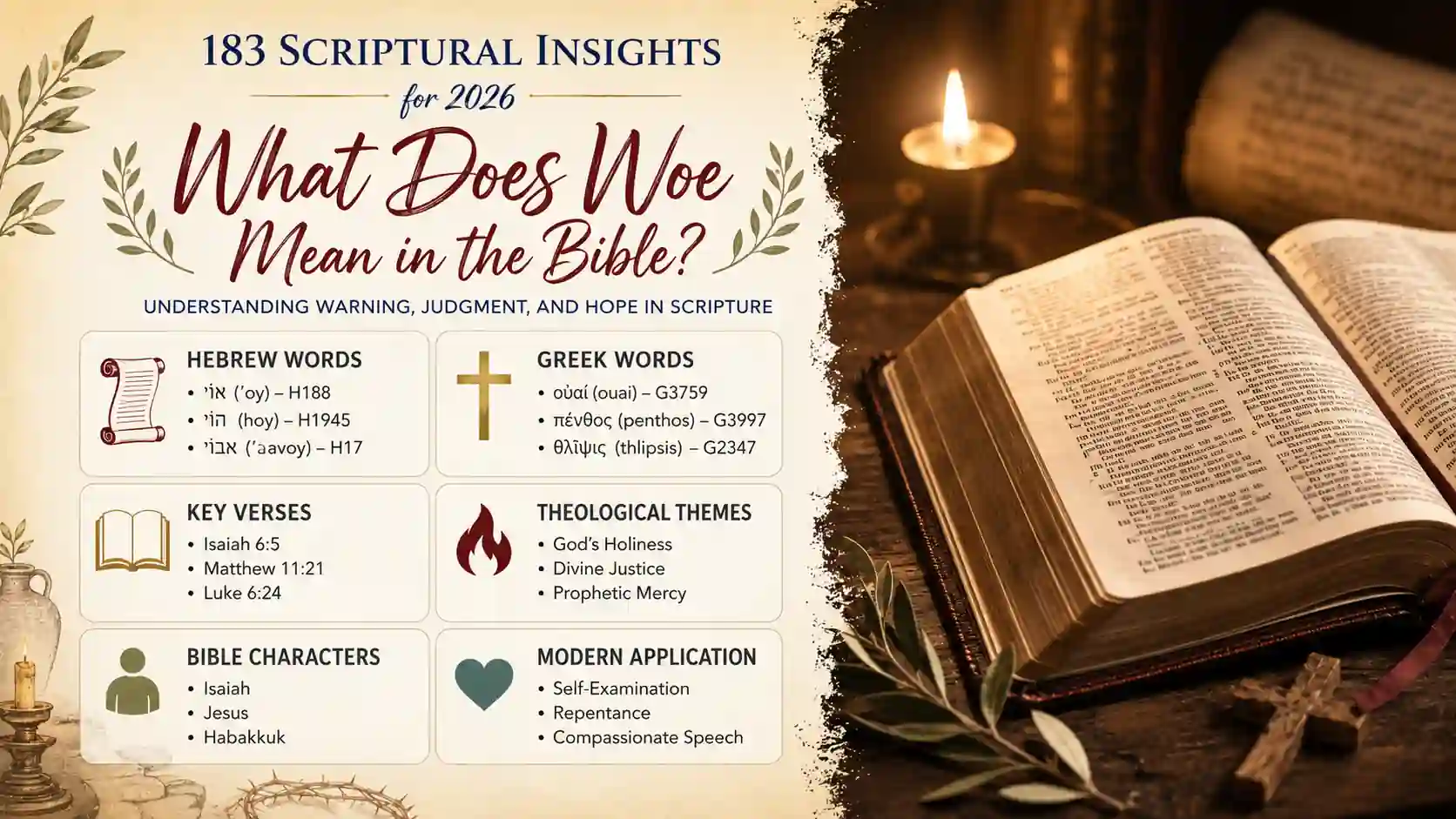
What does woe mean in the Bible? The word expresses grief, misery, warning, and divine judgment. Depending on its setting, “woe” may sound like a mourner’s cry, a prophet’s alarm, or a solemn announcement that rebellion against God will bring ruin.
As you study Scripture, you will see that biblical woe is not careless anger or a vindictive curse. It often combines holy justice with genuine sorrow. God exposes sin, warns those in danger, and calls His people to repentance before judgment arrives.
Woe in Key Scripture References
| Verse | Passage Snippet | Context |
|---|---|---|
| Numbers 21:29 | “Woe to you, Moab” | Israel’s victory song announces Moab’s defeat. |
| Isaiah 5:8 | Woe to greedy landowners | Judah’s wealthy accumulate property unjustly. |
| Isaiah 5:20 | Woe to moral inversion | Evil is called good and good evil. |
| Isaiah 6:5 | “Woe is me” | Isaiah recognizes his uncleanness before God. |
| Jeremiah 23:1 | Woe to destructive shepherds | Corrupt leaders scatter God’s people. |
| Habakkuk 2:6 | Woe to the plunderer | Babylon will receive the violence it practiced. |
| Matthew 11:21 | Woe to Chorazin and Bethsaida | Privileged cities refuse to repent. |
| Matthew 23:13 | Woe to scribes and Pharisees | Religious hypocrisy obstructs God’s kingdom. |
| Luke 6:24 | Woe to the rich | Self-satisfied hearers receive a covenant warning. |
| Revelation 18:10 | Woe over Babylon | Earthly powers lament a fallen corrupt city. |
Woe in Bible Translation Comparison
| Verse | KJV | NIV | ESV | NASB |
|---|---|---|---|---|
| Isaiah 5:8 | “Woe unto them” | “Woe to you” | “Woe to those” | “Woe to those” |
| Isaiah 6:5 | “Woe is me” | “Woe to me” | “Woe is me” | “Woe is me” |
| Isaiah 10:1 | “Woe unto them” | “Woe to those” | “Woe to those” | “Woe to those” |
| Jeremiah 23:1 | “Woe be unto” | “Woe to” | “Woe to” | “Woe to” |
| Habakkuk 2:6 | “Woe to him” | “Woe to him” | “Woe to him” | “Woe to him” |
| Matthew 11:21 | “Woe unto thee” | “Woe to you” | “Woe to you” | “Woe to you” |
| Matthew 23:13 | “Woe unto you” | “Woe to you” | “Woe to you” | “Woe to you” |
| Luke 6:24 | “Woe unto you” | “Woe to you” | “Woe to you” | “Woe to you” |
| Jude 11 | “Woe unto them” | “Woe to them” | “Woe to them” | “Woe to them” |
| Revelation 8:13 | “Woe, woe, woe” | “Woe! Woe! Woe!” | “Woe, woe, woe” | “Woe, woe, woe” |
People and Characters Associated with Woe
| Person | Role | Connection |
|---|---|---|
| Isaiah | Prophet to Judah | Confesses personal woe and pronounces national woes. |
| Jeremiah | Weeping prophet | Warns shepherds who destroy God’s flock. |
| Ezekiel | Exilic prophet | Announces woe over Jerusalem’s bloodshed. |
| Amos | Prophet of justice | Warns complacent and self-confident Israelites. |
| Habakkuk | Prophetic questioner | Records five woes against Babylonian oppression. |
| Jesus | Messiah and Judge | Pronounces woes against unbelief and hypocrisy. |
| Pharisees | Religious leaders | Receive warnings for pride and spiritual blindness. |
| Judas Iscariot | Betrayer of Jesus | Faces woe for betraying the Son of Man. |
| Cain | First murderer | Jude places false teachers in Cain’s condemned way. |
| Babylon | Symbolic world city | Receives apocalyptic woe for corruption and violence. |
Woe in Original Hebrew and Greek Words
| Original Word | Transliteration | Strong’s # | Literal Meaning |
|---|---|---|---|
| אוֹי | ʾoy | H188 | Alas, woe, anguished cry |
| הוֹי | hoy | H1945 | Ah, ho, woe, summons |
| אֲבוֹי | ʾavoy | H17 | Woe, sorrow, distress |
| אֵיךְ | ʾekh | H349 | How, alas, lamenting surprise |
| נְהִי | nehi | H5092 | Wailing, lamentation |
| קִינָה | qinah | H7015 | Lament, funeral song |
| οὐαί | ouai | G3759 | Woe, alas, grief or denunciation |
| πένθος | penthos | G3997 | Mourning, sorrow |
| θλῖψις | thlipsis | G2347 | Affliction, pressure, distress |
| κρίμα | krima | G2917 | Judgment, judicial sentence |
Woe and Related Biblical Concepts
| Concept | Connection | Supporting Verse |
|---|---|---|
| Lament | Woe can voice sincere personal grief. | Isaiah 6:5 |
| Judgment | Woe announces consequences for rebellion. | Isaiah 10:1-3 |
| Repentance | A warning gives sinners opportunity to turn. | Matthew 11:20-21 |
| Justice | Woes condemn exploitation and oppression. | Isaiah 5:8 |
| Hypocrisy | Jesus exposes outward religion without inward faithfulness. | Matthew 23:27-28 |
| Covenant | Woe reflects penalties for covenant disobedience. | Deuteronomy 28:15 |
| Pride | Self-exaltation often precedes announced ruin. | Habakkuk 2:4-6 |
| Compassion | Judgment may be spoken with grief. | Luke 13:34-35 |
| Accountability | Greater revelation brings greater responsibility. | Matthew 11:22 |
| Final judgment | Revelation’s woes anticipate God’s decisive victory. | Revelation 8:13 |
Woe in Historical and Cultural Context
| Aspect | Detail | Biblical Source |
|---|---|---|
| Funeral lament | “Woe” could echo mourning over the dead. | 1 Kings 13:30 |
| Prophetic speech | Prophets used woe to announce approaching disaster. | Isaiah 10:1 |
| Covenant lawsuit | God charged His people with violating covenant obligations. | Micah 6:1-2 |
| Social oppression | Woe confronted land theft and economic exploitation. | Isaiah 5:8 |
| Royal corruption | Leaders were judged for scattering and harming the flock. | Jeremiah 23:1 |
| Babylonian empire | Habakkuk’s woes challenged violent imperial power. | Habakkuk 2:6-20 |
| Honor culture | Public exposure revealed hidden religious shame. | Matthew 23:13-36 |
| Banquet imagery | Luke contrasts present luxury with future loss. | Luke 6:24-25 |
| Apocalyptic visions | Repeated woes intensify end-time judgment scenes. | Revelation 8:13 |
| Merchant economy | Babylon’s fall exposes wealth built through corruption. | Revelation 18:11-19 |
Woe and Its Theological Themes
| Theme | Explanation | Scripture |
|---|---|---|
| God’s holiness | Sin becomes dreadful when seen beside divine purity. | Isaiah 6:1-5 |
| Divine justice | God does not ignore oppression or violence. | Habakkuk 2:8 |
| Human responsibility | People answer for their response to revealed truth. | Matthew 11:21-24 |
| Prophetic mercy | Warning precedes judgment and invites repentance. | Joel 2:12-13 |
| Christ’s authority | Jesus speaks woe as the covenant Lord and Judge. | Matthew 23:13 |
| Religious accountability | Spiritual leaders face stricter scrutiny. | Luke 11:46 |
| Reversal | Present comfort may conceal future spiritual poverty. | Luke 6:24 |
| Retribution | Violent empires eventually reap what they sow. | Habakkuk 2:17 |
| Redemption | Confessed guilt may be cleansed by God’s grace. | Isaiah 6:6-7 |
| Final victory | Babylon’s woe accompanies heaven’s celebration. | Revelation 18:20 |
Woe in Modern Application for Believers
| Area | Practice | Scripture |
|---|---|---|
| Self-examination | Ask whether Isaiah’s confession should become yours. | Isaiah 6:5 |
| Repentance | Respond quickly when Scripture exposes sin. | Matthew 11:20 |
| Speech | Refuse to rename evil as good. | Isaiah 5:20 |
| Wealth | Reject greed, hoarding, and exploitation. | Isaiah 5:8 |
| Leadership | Shepherd others rather than using them. | Jeremiah 23:1-4 |
| Worship | Pursue inward purity, not religious appearance. | Matthew 23:25-26 |
| Compassion | Speak difficult truth with grief rather than pride. | Luke 13:34 |
| Discernment | Recognize teaching shaped by Cain, Balaam, or Korah. | Jude 11 |
| Endurance | Trust that oppressive powers will not rule forever. | Revelation 18:2 |
| Hope | Receive cleansing when conviction leads to confession. | Isaiah 6:7 |
אוֹי And the Cry of a Person Exposed Before God
The Hebrew interjection אוֹי, ʾoy, is Strong’s H188. It functions as an emotional cry that may be translated “woe,” “alas,” or “ah.” It can express anguish over another person’s ruin, but Isaiah 6:5 shows that it may also arise from personal conviction.
When Isaiah sees the Lord enthroned in holiness, he does not congratulate himself for being more righteous than Judah. He cries, “Woe is me,” because divine holiness exposes his unclean lips. Yet his woe is not the final word. God provides cleansing, showing you that conviction can become the doorway to forgiveness and service.
הוֹי And the Prophets’ Public Summons to Judgment
The Hebrew הוֹי, hoy, Strong’s H1945, often introduces a prophetic announcement. The cry may resemble a funeral lament, but it can also command attention. Isaiah, Jeremiah, Ezekiel, Amos, and Habakkuk use woe language to confront injustice, idolatry, complacency, pride, and violence.
These declarations are not random predictions of misfortune. They reveal the moral government of God. A society that steals land, exploits the weak, corrupts justice, and celebrates evil places itself beneath judgment. Prophetic woe teaches you to evaluate public and private conduct by God’s revealed character.
What Does Woe Mean in the Bible When Jesus Says οὐαί?
In the New Testament, the central word is οὐαί, ouai, Strong’s G3759. Jesus uses it against cities that witnessed His works without repenting and against leaders whose hypocrisy misrepresented God. His woes carry authority because He is not merely commenting on sin. He is announcing its true standing before God.
Still, Christ’s words should not be read as cold hostility. He grieves over Jerusalem even while announcing its coming desolation. His sorrow and judgment belong together. When Jesus says “woe,” you hear both the seriousness of rejecting God and the compassionate warning of the One who calls sinners to return.
Revelation’S Three Woes and the Fall of Babylon
Revelation intensifies the expression through repeated cries of “woe.” In Revelation 8:13, three approaching woes correspond to severe trumpet judgments. Later, kings and merchants cry woe over Babylon because the luxurious system that enriched them collapses in a single hour.
Their grief is revealing. They mourn Babylon’s loss, not Babylon’s sins. Heaven, however, rejoices because God has judged a power associated with seduction, exploitation, persecution, and bloodshed. These passages teach you not to anchor your hope in economic grandeur or political influence, but in God’s enduring kingdom.
Frequently Asked Questions About Biblical Woe
Does אוֹי, ʾoy, always announce God’s judgment?
No. It can express personal anguish, as in Isaiah’s confession, or lament another person’s approaching ruin.
Why does Jesus pronounce οὐαί against the Pharisees in Matthew 23?
He condemns their hypocrisy, distorted priorities, spiritual blindness, and harmful influence over those seeking God.
Is “woe” the same as placing a curse on someone?
Not necessarily. Biblical woe is usually a lament, warning, or authoritative announcement of consequences rather than a magical curse.
Why do modern translations retain the old word “woe”?
“Woe” preserves the combination of grief, danger, denunciation, and judgment that ordinary words such as “sadness” cannot fully convey.
How should you respond when a biblical woe exposes your own sin?
Follow Isaiah’s pattern by confessing honestly, receiving God’s cleansing, and answering His call with obedient faith.