
What does snare mean in the Bible? A snare is a concealed trap that captures, restrains, or destroys its victim. Scripture draws this picture from hunting and bird-catching, then applies it to temptation, idolatry, destructive relationships, fear of people, wicked schemes, false teaching, and unexpected judgment.
As you study the term, you will find both warning and hope. Human beings set snares, sin becomes a snare, and Satan uses snares, yet the Lord exposes traps, protects those who trust him, and delivers the captive who returns to truth.
Key Snare Scripture References
| Verse | Passage Snippet | Context |
|---|---|---|
| Exodus 10:7 | “How long shall this man be a snare?” | Pharaoh’s servants recognize that resistance to Moses is ruining Egypt. |
| Exodus 23:33 | “It will surely be a snare unto thee” | Israel is warned that serving Canaanite gods will entrap the nation. |
| Judges 8:27 | “A snare unto Gideon” | Gideon’s ephod becomes an object of idolatrous worship. |
| Psalm 91:3 | “The snare of the fowler” | God protects the faithful from concealed and deadly dangers. |
| Psalm 124:7 | “The snare is broken” | Israel celebrates divine escape from enemies who sought its destruction. |
| Proverbs 29:25 | “The fear of man bringeth a snare” | Craving human approval compromises faithful obedience. |
| Luke 21:35 | “As a snare” | Jesus warns that the day of judgment will arrive unexpectedly. |
| 1 Timothy 6:9 | “Temptation and a snare” | The desire for wealth traps people in ruinous desires. |
| 2 Timothy 2:26 | “The snare of the devil” | False teachers need repentance and release from spiritual captivity. |
Snare Bible Translation Comparison
| Verse | KJV | NIV | ESV | NASB |
|---|---|---|---|---|
| Exodus 10:7 | “snare unto us” | “snare to us” | “snare to us” | “snare to us” |
| Judges 8:27 | “snare unto Gideon” | “snare to Gideon” | “snare to Gideon” | “snare to Gideon” |
| Psalm 91:3 | “snare of the fowler” | “fowler’s snare” | “snare of the fowler” | “trap of the fowler” |
| Proverbs 29:25 | “bringeth a snare” | “prove to be a snare” | “lays a snare” | “brings a snare” |
| Luke 21:35 | “as a snare” | “like a trap” | “like a trap” | “like a trap” |
| Romans 11:9 | “a snare” | “a snare” | “a trap” | “a trap” |
| 1 Timothy 6:9 | “temptation and a snare” | “temptation and a trap” | “temptation, into a snare” | “temptation and a trap” |
| 2 Timothy 2:26 | “snare of the devil” | “trap of the devil” | “snare of the devil” | “snare of the devil” |
People and Characters Associated with a Snare
| Person | Role | Connection |
|---|---|---|
| Pharaoh | King of Egypt | His stubborn opposition to Moses becomes a snare to Egypt. |
| Moses | Covenant mediator | Pharaoh’s servants describe him as a snare because judgment follows rejection. |
| Joshua | Leader of Israel | He warns that remaining Canaanite nations can become traps and snares. |
| Gideon | Judge and deliverer | His golden ephod becomes a snare to him and his household. |
| David | King and psalmist | He repeatedly prays for rescue from secret nets and snares. |
| Saul | King of Israel | He uses marriage to Michal as a scheme to entrap David. |
| Solomon | Wisdom teacher | He warns about greed, rash vows, evil speech, and fear of people. |
| Jesus | Messiah and teacher | He describes final judgment as a trap arriving upon the unprepared. |
| Paul | Apostle | He warns about wealth, pride, false teaching, and the devil’s snare. |
Original Hebrew and Greek Snare Words
| Original Word | Transliteration | Strong’s # | Literal Meaning |
|---|---|---|---|
| מוֹקֵשׁ | môqēš | H4170 | Bait, lure, noose, or trap |
| יָקֹשׁ | yāqōš | H3369 | To lay bait or ensnare |
| פַּח | paḥ | H6341 | Bird trap or springing snare |
| רֶשֶׁת | rešet | H7568 | Woven net for catching |
| מָצוֹד | māṣôḏ | H4685 | Net, hunting device, or stronghold |
| παγίς | pagis | G3803 | Trap, snare, or noose |
| βρόχος | brochos | G1029 | Noose, restraint, or binding loop |
| θήρα | thēra | G2339 | Hunting, prey, or trap |
| σκάνδαλον | skandalon | G4625 | Trap trigger or stumbling block |
Biblical Concepts Related to a Snare
| Concept | Connection | Supporting Verse |
|---|---|---|
| Idolatry | False worship captures the heart and redirects covenant loyalty. | Exodus 23:33 |
| Fear of people | Human approval pressures you to disobey God. | Proverbs 29:25 |
| Greed | The craving for wealth produces temptation and ruin. | 1 Timothy 6:9 |
| Rash speech | Careless words can bind the speaker like a trap. | Proverbs 6:2 |
| Evil alliances | Ungodly influence can lead God’s people into compromise. | Joshua 23:13 |
| Deception | Wicked people hide traps beneath persuasive appearances. | Psalm 64:5 |
| Spiritual warfare | The devil seeks to capture people for his purposes. | 2 Timothy 2:26 |
| Divine judgment | Judgment overtakes those who assume they are secure. | Luke 21:34-35 |
| Deliverance | God breaks the trap and releases his threatened people. | Psalm 124:7 |
Historical and Cultural Context of a Snare
| Aspect | Detail | Biblical Source |
|---|---|---|
| Bird-catching | Fowler’s traps used bait, nets, cords, or concealed mechanisms. | Psalm 91:3 |
| Animal hunting | Hunters placed traps where animals traveled or fed. | Amos 3:5 |
| Concealment | A successful snare remained unseen until it closed. | Psalm 140:5 |
| Sudden capture | Spring traps seized prey quickly and unexpectedly. | Ecclesiastes 9:12 |
| Nets and cords | Woven nets restrained prey after capture. | Psalm 57:6 |
| Bait | An attractive object drew the victim toward danger. | Proverbs 7:23 |
| Warfare | Nets and snares pictured ambushes prepared by enemies. | Psalm 35:7 |
| Covenant life | Pagan worship threatened Israel’s loyalty to the Lord. | Deuteronomy 7:16 |
| Judicial imagery | Prophets used snares to portray unavoidable judgment. | Isaiah 24:17-18 |
Theological Themes in the Biblical Snare Image
| Theme | Explanation | Scripture |
|---|---|---|
| Sin enslaves | Sin promises freedom but produces bondage. | Proverbs 5:22 |
| Idolatry corrupts | Worshiping created things traps the covenant community. | Judges 8:27 |
| Evil hides | Temptation often conceals its final cost. | Proverbs 1:17-19 |
| God sees | No secret trap escapes the Lord’s knowledge. | Psalm 64:5-7 |
| Judgment surprises | The unprepared encounter judgment suddenly. | Luke 21:35 |
| Truth liberates | Repentance restores clear thinking and spiritual freedom. | 2 Timothy 2:25-26 |
| Trust protects | Dependence on God counters the fear of human opinion. | Proverbs 29:25 |
| God delivers | The Lord can break what human strength cannot escape. | Psalm 124:7 |
| Watchfulness matters | Believers must remain sober, prayerful, and discerning. | Luke 21:34-36 |
Modern Application of the Biblical Snare
| Area | Practice | Scripture |
|---|---|---|
| Approval | Obey God rather than living for praise or acceptance. | Proverbs 29:25 |
| Finances | Practice contentment and reject the craving to become rich. | 1 Timothy 6:6-10 |
| Relationships | Evaluate influences that normalize compromise or idolatry. | Joshua 23:12-13 |
| Speech | Avoid promises and claims that bind your conscience carelessly. | Proverbs 6:1-3 |
| Temptation | Identify attractive bait before it becomes controlling behavior. | James 1:14-15 |
| Discernment | Test teaching patiently by the truth of Scripture. | 2 Timothy 2:24-26 |
| Prayer | Ask God to expose hidden dangers and preserve your steps. | Psalm 141:9 |
| Anxiety | Replace fear of people with confident trust in the Lord. | Proverbs 29:25 |
| Readiness | Guard your heart against distraction and spiritual dullness. | Luke 21:34-36 |
מוֹקֵשׁ And the Old Testament Picture of Hidden Bondage
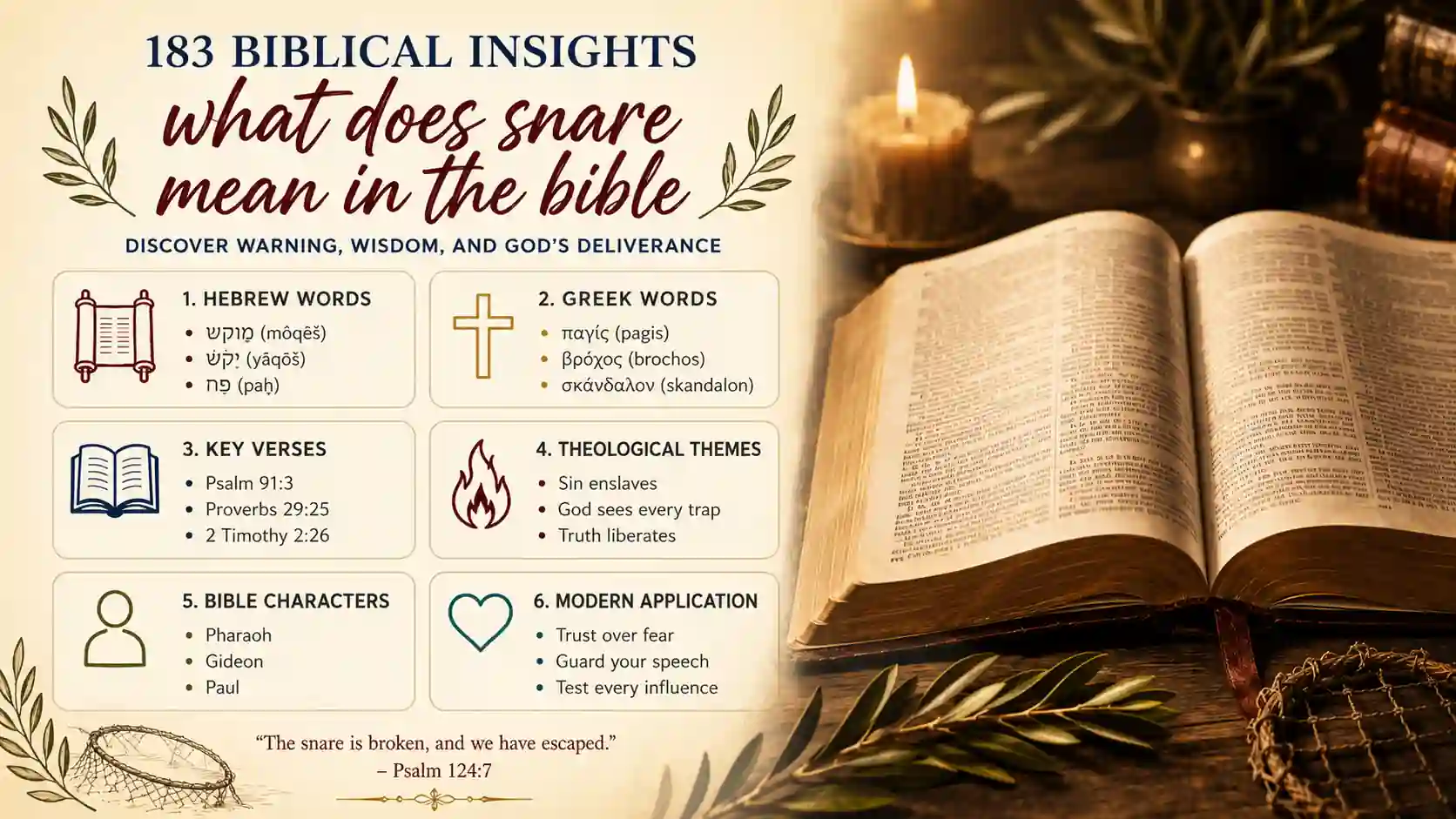
The most prominent Hebrew noun is מוֹקֵשׁ, môqēš, Strong’s H4170. It can describe bait, a noose, or a trap that catches an unsuspecting victim. Its related verb, יָקֹשׁ, yāqōš, means to lay a snare, catch, or become ensnared.
This imagery explains why Scripture calls idolatry a snare. Pagan worship was not merely an alternative religious preference for Israel. It attracted the heart, displaced loyalty to the Lord, and eventually held families and communities in patterns of covenant unfaithfulness.
What Does Snare Mean in the Bible’S Wisdom Books?
In Psalms and Proverbs, a snare often represents concealed danger within ordinary life. Enemies secretly lay nets, violent people devise plots, and greedy individuals are caught by the very schemes through which they hoped to prosper.
The wisdom writers also turn the image inward. Your own words can trap you, the fear of people can govern you, and sinful desire can lead you toward consequences you did not foresee. The snare is therefore both an external threat and an internal vulnerability.
Proverbs 29:25 presents the remedy clearly. Fear of people lays a snare, but trust in the Lord provides security. Biblical safety does not come from pleasing everyone. It grows as your confidence in God becomes stronger than your dependence on human approval.
παγίς And the New Testament’S Warning About Spiritual Captivity
The principal New Testament word is παγίς, pagis, Strong’s G3803. It refers literally to a trap that holds an animal fast, but Paul uses it for spiritual and moral dangers. The desire to become rich leads people into temptation, a snare, and destructive cravings.
Paul also speaks of the devil’s παγίς in 1 Timothy 3:7 and 2 Timothy 2:26. Pride, disgrace, false teaching, and hardened opposition to truth can place a person under the enemy’s influence. The captive may even defend the ideas that keep him bound.
Yet 2 Timothy does not encourage harshness toward the trapped person. The Lord’s servant must teach patiently and correct opponents with gentleness, hoping God will grant repentance. Truth breaks the snare by restoring sound judgment and leading the captive back to obedience.
The Broken Snare and God’S Work of Deliverance
A snare is dangerous because the victim usually does not recognize it until escape seems impossible. Ecclesiastes compares human beings to birds caught suddenly in a trap, while Jesus uses similar imagery for the unexpected arrival of the day of judgment.
Scripture never presents God as helpless before hidden dangers. Psalm 124:7 declares that the snare has been broken and God’s people have escaped. The image celebrates deliverance that cannot be credited to human strength, cleverness, or favorable circumstances.
Your study of snares should therefore produce vigilance without despair. You are called to recognize temptation, resist idolatry, reject fear-driven compromise, and remain prayerful. You are also invited to trust the Lord who sees every trap and is able to release those who seek him.
Frequently Asked Questions About Snares in the Bible
What is the difference between מוֹקֵשׁ, môqēš, and פַּח, paḥ?
Both can mean a trap, but môqēš emphasizes bait or entanglement, while paḥ often pictures a bird trap that closes suddenly.
Why does Proverbs 29:25 call the fear of man a snare?
Fear of human rejection traps you when another person’s approval becomes more controlling than faithful obedience to God.
Does the snare of the fowler in Psalm 91:3 refer only to physical danger?
It begins with hunting imagery but poetically represents concealed threats from which the Lord is able to rescue his people.
What is the devil’s παγίς, pagis, in 2 Timothy 2:26?
It is spiritual captivity in which deception and disobedience hold a person under the devil’s influence until repentance restores clear judgment.
Why do some translations use “trap” instead of “snare”?
Both words communicate the same basic image, though “snare” often suggests a concealed noose or device while “trap” is more familiar modern English.