
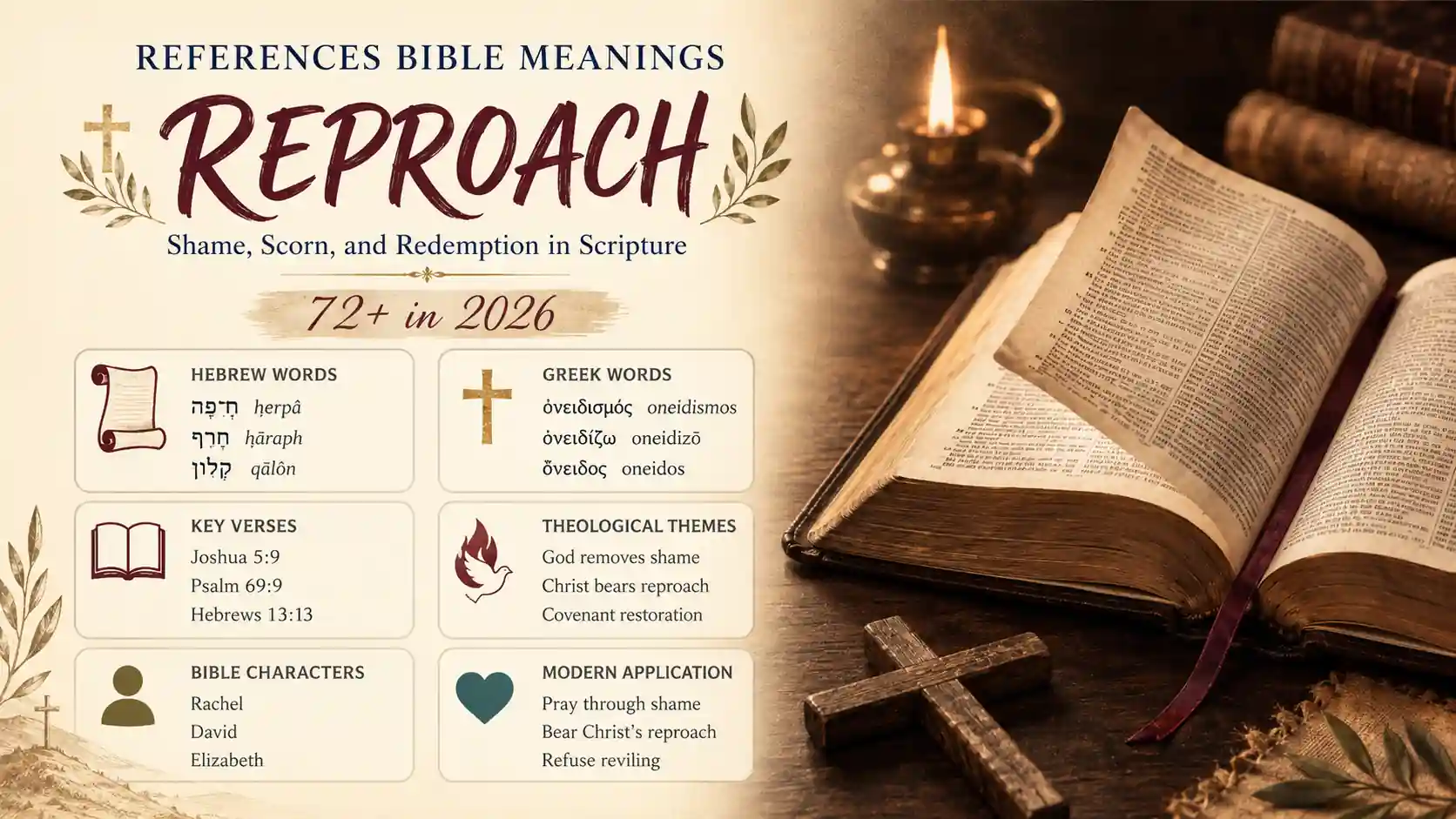
What does reproach mean in the Bible? In Scripture, reproach is shame, scorn, disgrace, or verbal contempt placed upon a person, people, or even God’s name. It may come through insults, public humiliation, covenant shame, enemy taunts, or unjust suffering.
Yet reproach is not only social pain. Your study will show that God sees reproach, removes it, judges it, and even calls His people to bear it faithfully when loyalty to Christ brings dishonor before the world.
Reproach Key Scripture References
| Verse | Passage Snippet | Context |
|---|---|---|
| Genesis 30:23 | “God hath taken away my reproach” | Rachel’s barrenness lifted |
| Joshua 5:9 | “reproach of Egypt” | Gilgal and covenant renewal |
| 1 Samuel 17:26 | “reproach from Israel” | David hears Goliath’s defiance |
| Nehemiah 1:3 | “in great affliction and reproach” | Jerusalem’s broken walls |
| Psalm 69:9 | “reproaches… fallen upon me” | Zeal for God brings suffering |
| Psalm 119:22 | “Remove from me reproach” | The faithful servant mocked |
| Isaiah 54:4 | “forget the shame of thy youth” | Restored Zion comforted |
| Luke 1:25 | “taken away my reproach” | Elizabeth’s barrenness ended |
| Hebrews 13:13 | “bearing his reproach” | Disciples follow Christ outside |
Reproach Bible Translation Comparison
| Verse | KJV | NIV | ESV | NASB |
|---|---|---|---|---|
| Joshua 5:9 | “reproach of Egypt” | “disgrace of Egypt” | “reproach of Egypt” | “shame of Egypt” |
| 1 Samuel 17:26 | “taketh away the reproach” | “remove this disgrace” | “take away the reproach” | “take away the shame” |
| Psalm 69:9 | “reproaches” | “insults” | “reproaches” | “reproaches” |
| Psalm 119:22 | “reproach and contempt” | “scorn and contempt” | “scorn and contempt” | “reproach and contempt” |
| Proverbs 14:34 | “sin is a reproach” | “sin condemns” | “sin is a reproach” | “sin is a disgrace” |
| Isaiah 54:4 | “reproach of thy widowhood” | “reproach of your widowhood” | “reproach of your widowhood” | “reproach of your widowhood” |
| Ezekiel 36:30 | “reproach of famine” | “disgrace of famine” | “disgrace of famine” | “disgrace of famine” |
| Romans 15:3 | “reproaches… fell on me” | “insults… fallen on me” | “reproaches… fell on me” | “reproaches… fell on Me” |
| Hebrews 11:26 | “reproach of Christ” | “disgrace for… Christ” | “reproach of Christ” | “reproach of Christ” |
Reproach People & Characters Associated
| Person | Role | Connection |
|---|---|---|
| Rachel | Matriarch | Barrenness called reproach |
| Elizabeth | Mother of John | Reproach removed by God |
| David | Shepherd king | Faced Goliath’s reproach |
| Hannah | Mother of Samuel | Mocked for barrenness |
| Nehemiah | Governor | Saw Jerusalem in reproach |
| Job | Suffering righteous man | Friends deepened his shame |
| Jeremiah | Prophet | Bore insult for God’s word |
| Zion | Covenant city | Shamed, then restored |
| Jesus Christ | Messiah | Bore reproach outside the gate |
Reproach Original Hebrew & Greek Words
| Original Word | Transliteration | Strong’s # | Literal Meaning |
|---|---|---|---|
| חֶרְפָּה | ḥerpâ | H2781 | reproach, disgrace |
| חָרַף | ḥāraph | H2778 | to reproach, taunt |
| גְּדֻפָּה | geduphâ | H1422 | reviling, blasphemy |
| קָלוֹן | qālôn | H7036 | shame, dishonor |
| בּוּז | bûz | H937 | contempt, despising |
| ὀνειδισμός | oneidismos | G3680 | reproach, disgrace |
| ὀνειδίζω | oneidizō | G3679 | to revile, insult |
| ὄνειδος | oneidos | G3681 | reproach, shame |
| λοιδορία | loidoria | G3059 | railing, abusive speech |
Reproach Related Biblical Concepts
| Concept | Connection | Supporting Verse |
|---|---|---|
| Shame | Reproach wounds honor | Isaiah 54:4 |
| Barrenness | Seen as social disgrace | Luke 1:25 |
| Covenant disgrace | Israel judged among nations | Ezekiel 36:30 |
| Enemy taunts | Nations mock God’s people | Psalm 79:4 |
| Blasphemy | Reproach aimed at God | 2 Kings 19:4 |
| Persecution | Faithfulness brings insult | Matthew 5:11 |
| Humiliation | Public lowering of status | Psalm 22:6 |
| Vindication | God removes reproach | Zephaniah 3:18 |
| Christlike suffering | Believers share His shame | Hebrews 13:13 |
Reproach Historical & Cultural Context
| Aspect | Detail | Biblical Source |
|---|---|---|
| Honor society | Public shame carried weight | 1 Samuel 17:26 |
| Barrenness | Often brought social reproach | Genesis 30:23 |
| City walls | Broken walls meant disgrace | Nehemiah 1:3 |
| Exile | Nations mocked Israel’s fall | Psalm 79:4 |
| Famine | Lack of harvest shamed land | Ezekiel 36:30 |
| Circumcision | Gilgal marked covenant identity | Joshua 5:9 |
| Crucifixion | Jesus died in public shame | Hebrews 13:12 |
| Prophets | Messengers endured ridicule | Jeremiah 20:8 |
| Early church | Believers were reviled | 1 Peter 4:14 |
Reproach Theological Themes
| Theme | Explanation | Scripture |
|---|---|---|
| God removes shame | Reproach is not final | Joshua 5:9 |
| Sin disgraces nations | Wickedness brings public shame | Proverbs 14:34 |
| God’s name matters | Reproach may attack God | Psalm 69:9 |
| Messiah suffers | Christ bears reproach | Romans 15:3 |
| Covenant restoration | Zion’s shame is healed | Isaiah 54:4 |
| Holy endurance | Faith may invite insult | Hebrews 11:26 |
| Divine justice | Mockers answer to God | Psalm 79:12 |
| Shared discipleship | Believers bear Christ’s reproach | Hebrews 13:13 |
| Final honor | God gathers the shamed | Zephaniah 3:19 |
Reproach Modern Application for Believers
| Area | Practice | Scripture |
|---|---|---|
| Prayer | Ask God to remove shame | Psalm 119:22 |
| Identity | Receive God’s covenant mercy | Joshua 5:9 |
| Speech | Refuse reviling in return | 1 Peter 2:23 |
| Suffering | Bear insult with Christ | Hebrews 13:13 |
| Holiness | Avoid sin’s disgrace | Proverbs 14:34 |
| Compassion | Do not deepen another’s shame | Job 19:3 |
| Witness | Expect reproach for truth | Matthew 5:11 |
| Worship | Treasure God’s name | Psalm 69:9 |
| Hope | Trust God’s final vindication | Zephaniah 3:19 |
חֶרְפָּה ḥErpâ and the Covenant Pain Behind Reproach
The main Hebrew noun for reproach is חֶרְפָּה, ḥerpâ. It describes disgrace that can be felt personally, socially, and spiritually. Rachel used this kind of language when God gave her Joseph and removed the shame of barrenness. Israel felt it when enemies mocked Jerusalem, the temple, and the covenant people.
This word is never merely about embarrassment. In the Old Testament, reproach often touches covenant identity. When Israel is defeated, barren, exiled, hungry, or mocked, the nations may read that shame as a statement about Israel’s God. That is why the psalms plead for deliverance, not only for human comfort, but for the honor of the Lord’s name.
The Reproach of Egypt at Gilgal and God’S Removal of Shame
Joshua 5:9 is one of the clearest texts for understanding reproach. After Israel crossed the Jordan and renewed circumcision, the Lord said He had rolled away “the reproach of Egypt.” Gilgal became the place where former shame met covenant restoration. Israel was no longer wandering as a disgraced people under Egypt’s shadow.
The passage shows that reproach may cling to a people because of slavery, unbelief, delay, or public humiliation. Yet God can remove what history has attached to His people. The removal of reproach is not self-invention. It is the Lord’s covenant act of naming His people again.
What Does Reproach Mean in the Bible When Christ Bears It?
The New Testament gathers the theme around Jesus. Romans 15:3 quotes Psalm 69, saying the reproaches aimed at God fell on Christ. Hebrews 13:13 then calls believers to go to Him “outside the camp,” bearing His reproach. The shame of rejection becomes the road of discipleship.
This is not a call to seek humiliation for its own sake. It is a call to value Christ above public approval. When faithfulness to Jesus brings insult, exclusion, or misunderstanding, the believer is not abandoned. He or she is standing with the crucified Messiah, whose shame became the place of redemption.
Reproach, Reviling, and the Holiness of Christian Speech
The Greek verb ὀνειδίζω, oneidizō, often means to revile, insult, or reproach. Jesus uses this world of meaning in Matthew 5:11, where the blessed are those reviled for His sake. Peter later says Christ did not revile in return when He suffered. The pattern is not retaliation, but entrusted judgment.
This matters for your daily discipleship. Christians may suffer reproach, but they must not become people of reproachful speech. Scripture distinguishes bearing insult from giving it. The church’s witness grows stronger when believers answer shame with holiness, patience, truth, and mercy.
Questions About Reproach in the Bible
Does חֶרְפָּה ḥerpâ always mean personal shame?
No. It can describe personal disgrace, national humiliation, covenant shame, or insults aimed at God’s people.
Why does Joshua 5:9 connect reproach with Egypt?
Because Israel’s former slavery and wilderness shame were publicly rolled away through covenant renewal at Gilgal.
Why do some translations say “insults” instead of “reproaches” in Psalm 69:9?
They are interpreting ὀνειδισμός and related reproach language as hostile verbal abuse.
Is bearing Christ’s reproach the same as ordinary embarrassment?
No. Hebrews 13:13 refers to suffering dishonor because of loyal identification with Jesus.
How should believers respond when they are reproached unfairly?
Follow Christ’s pattern by refusing reviling, entrusting judgment to God, and continuing in faithful obedience.