
What does bastard mean in the Bible? The answer requires careful study, because the English word can sound harsher today than it sounded in older translations. In Scripture, it points to questions of illegitimate birth, covenant membership, inheritance, discipline, and recognized sonship.
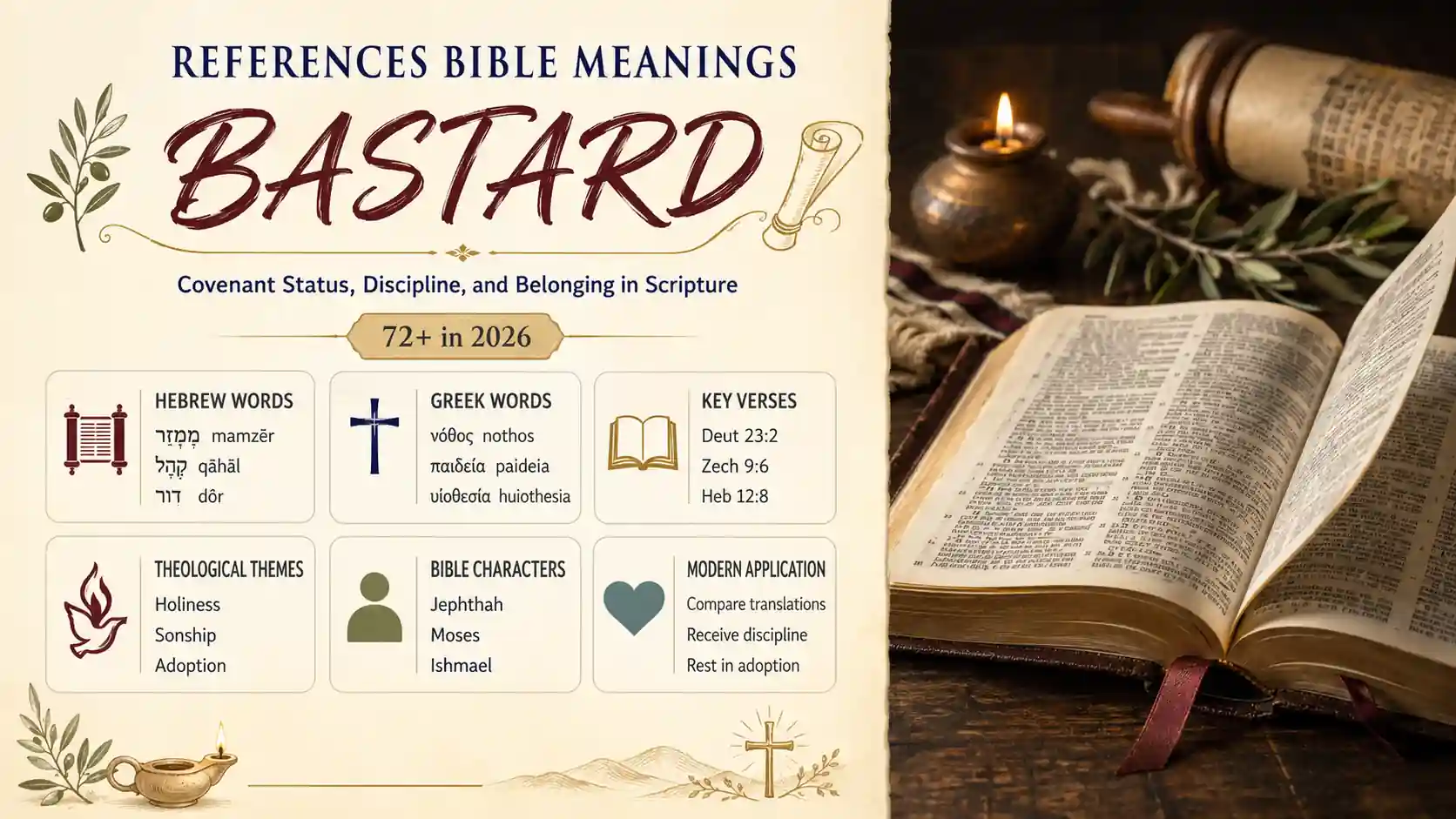
The key biblical words are מַמְזֵר, mamzēr, in the Old Testament and νόθος, nothos, in the New Testament. Both words are rare, but their settings are weighty, so your study should move slowly and reverently.
Bastard Key Scripture References
| Verse | Passage Snippet | Context |
|---|---|---|
| Deuteronomy 23:2 | “A bastard shall not enter” | Covenant assembly law |
| Zechariah 9:6 | “A bastard shall dwell” | Judgment on Ashdod |
| Hebrews 12:8 | “Bastards, and not sons” | Fatherly discipline |
| Judges 11:1 | “Son of an harlot” | Jephthah’s disputed status |
| Judges 11:2 | “Thou shalt not inherit” | Family exclusion |
| Genesis 21:10 | “Cast out this bondwoman” | Inheritance conflict |
| Galatians 4:30 | “Shall not be heir” | Allegory of sonship |
| John 8:41 | “We be not born” | Disputed spiritual paternity |
| Romans 8:15 | “Spirit of adoption” | Accepted as God’s children |
Bastard Bible Translation Comparison
| Verse | KJV | NIV | ESV | NASB |
|---|---|---|---|---|
| Deuteronomy 23:2 | “bastard” | “forbidden marriage” | “forbidden union” | “illegitimate birth” |
| Zechariah 9:6 | “bastard” | “mongrel people” | “mixed people” | “mixed people” |
| Hebrews 12:8 | “bastards” | “not legitimate” | “illegitimate children” | “illegitimate children” |
| Judges 11:1 | “son of an harlot” | “son of a prostitute” | “son of a prostitute” | “son of a prostitute” |
| Judges 11:2 | “not inherit” | “not get any inheritance” | “not have an inheritance” | “shall not have inheritance” |
| Genesis 21:10 | “shall not be heir” | “will never share” | “shall not be heir” | “shall not be heir” |
| Galatians 4:30 | “shall not be heir” | “never share” | “shall not inherit” | “shall not be an heir” |
| John 8:41 | “not born of fornication” | “not illegitimate children” | “not born of sexual immorality” | “not born as a result of sexual immorality” |
| Romans 8:15 | “Spirit of adoption” | “Spirit brought about adoption” | “Spirit of adoption” | “spirit of adoption” |
Bastard People and Characters Associated
| Person | Role | Connection |
|---|---|---|
| Moses | Lawgiver | Speaks Deuteronomy’s assembly law |
| Israel | Covenant people | Guarded by holiness boundaries |
| מַמְזֵר, mamzēr | Excluded person | Named in Deuteronomy 23:2 |
| Ashdod | Philistine city | Receives judgment in Zechariah 9:6 |
| Philistines | Israel’s neighbors | Linked with mixed occupation |
| Hebrews audience | New covenant believers | Warned about sonship and discipline |
| Jephthah | Judge of Israel | Born from a prostitute |
| Gilead | Jephthah’s father | Household inheritance dispute |
| Hagar and Ishmael | Bondwoman and son | Used in heirship contrast |
Bastard Original Hebrew and Greek Words
| Original Word | Transliteration | Strong’s # | Literal Meaning |
|---|---|---|---|
| מַמְזֵר | mamzēr | H4464 | Illegitimate, alienated one |
| νόθος | nothos | G3541 | Illegitimate, baseborn |
| קָהָל | qāhāl | H6951 | Assembly, congregation |
| בּוֹא | bôʾ | H935 | Enter, come in |
| דּוֹר | dôr | H1755 | Generation |
| יָסַר | yāsar | H3256 | Discipline, correct |
| παιδεία | paideia | G3809 | Training, discipline |
| υἱός | huios | G5207 | Son |
| υἱοθεσία | huiothesia | G5206 | Adoption as son |
Bastard Related Biblical Concepts
| Concept | Connection | Supporting Verse |
|---|---|---|
| Covenant assembly | Entry restricted | Deuteronomy 23:2 |
| Illegitimate birth | Status questioned | Hebrews 12:8 |
| Inheritance | Sonship recognized | Judges 11:2 |
| Discipline | Proof of belonging | Hebrews 12:6 |
| Adoption | Grace gives standing | Romans 8:15 |
| Holiness | Israel set apart | Deuteronomy 23:1 |
| Mixed peoples | Ashdod humbled | Zechariah 9:6 |
| Fatherhood | God receives children | Hebrews 12:7 |
| Heirship | Promise over flesh | Galatians 4:30 |
Bastard Historical and Cultural Context
| Aspect | Detail | Biblical Source |
|---|---|---|
| Ancient household | Birth shaped inheritance | Judges 11:2 |
| Covenant citizenship | Assembly had boundaries | Deuteronomy 23:2 |
| Tenth generation | Long exclusion formula | Deuteronomy 23:2 |
| Philistine cities | Ashdod judged | Zechariah 9:6 |
| Legal status | Family line mattered | Genesis 21:10 |
| Public shame | Birth could affect honor | John 8:41 |
| Fatherly discipline | Sons trained by fathers | Hebrews 12:7 |
| Greco-Roman imagery | Illegitimate sons lacked status | Hebrews 12:8 |
| New covenant grace | Adoption reshapes identity | Romans 8:15 |
Bastard Theological Themes
| Theme | Explanation | Scripture |
|---|---|---|
| Holiness | God guards His people | Deuteronomy 23:2 |
| Judgment | Proud cities are humbled | Zechariah 9:6 |
| Sonship | God treats believers as sons | Hebrews 12:7 |
| Discipline | Correction proves care | Hebrews 12:8 |
| Adoption | Grace grants family standing | Romans 8:15 |
| Inheritance | Heirs receive promise | Galatians 4:30 |
| Mercy | Outsiders may be received | Isaiah 56:3 |
| Identity | Birth is not final hope | John 1:12 |
| Covenant order | God defines belonging | Deuteronomy 23:1 |
Bastard Modern Application for Believers
| Area | Practice | Scripture |
|---|---|---|
| Bible study | Check the original words | Deuteronomy 23:2 |
| Translation reading | Compare wording carefully | Hebrews 12:8 |
| Church care | Avoid shaming children | Mark 10:14 |
| Identity | Rest in adoption | Romans 8:15 |
| Discipline | Receive correction humbly | Hebrews 12:6 |
| Holiness | Honor God’s covenant order | Deuteronomy 23:2 |
| Mercy | Welcome the repentant | Isaiah 56:7 |
| Family pain | Bring exclusion to God | Judges 11:2 |
| Hope | Trust Christ for belonging | John 1:12 |
מַמְזֵר, MamzēR, and the Hard Law of Deuteronomy 23:2
The Old Testament word translated “bastard” in the KJV is מַמְזֵר, mamzēr. It appears only in Deuteronomy 23:2 and Zechariah 9:6, which means no interpreter should speak carelessly. The word likely refers to a person of illegitimate or disordered birth, though scholars debate the exact social category.
In Deuteronomy, the issue is not God mocking a child. The issue is covenant order, public holiness, and membership in the קָהָל, qāhāl, the assembly of the Lord. Israel’s life was structured by family lines, inheritance, marriage boundaries, and visible separation from surrounding nations.
Ashdod, Zechariah 9:6, and the Strange Use of Bastard Language
Zechariah 9:6 uses מַמְזֵר, mamzēr, in a prophetic oracle against Philistine cities. Ashdod, a proud Philistine center, would be occupied by a mixed or alienated people. Here the word appears less as a family law term and more as a sign of humiliation and disrupted identity.
That matters for your study because the Bible does not use the word in only one emotional register. In Deuteronomy it concerns assembly access. In Zechariah it pictures judgment on a city’s pride. Both texts connect the word with boundary, status, and loss of recognized standing.
νόθος, Nothos, and the Fatherly Logic of Hebrews 12:8
In Hebrews 12:8, νόθος, nothos, is used in a pastoral warning about discipline. The verse does not teach that suffering earns salvation. It teaches that God’s correcting hand belongs to His fatherly care, because sons are trained, not ignored.
The contrast is between recognized children and those without legitimate standing in the household. Hebrews turns a painful social image into spiritual comfort. If God corrects you, He is not rejecting you. He is treating you as a beloved child whose future inheritance matters.
What Does Bastard Mean in the Bible for Christian Identity?
The Bible’s rare “bastard” language should never be used as a weapon against people born into painful family circumstances. Scripture places guilt on sin, covenant rebellion, and human disorder, not on a child as though the child were morally inferior by birth.
The fuller biblical witness moves toward grace, adoption, and restored belonging. John 1:12 says those who receive Christ are given authority to become children of God. Romans 8:15 says believers receive the Spirit of adoption, by whom they cry, “Abba, Father.”
Questions Bible Students Ask About Bastard in Scripture
Does מַמְזֵר, mamzēr, always mean a child born outside marriage?
Not with total certainty, since it appears only twice, but it clearly concerns illegitimate, mixed, or alienated status.
Why does the KJV say “bastard” in Deuteronomy 23:2 while newer versions say “illegitimate birth” or “forbidden union”?
Modern translations often avoid the harsh modern tone and try to express the likely legal meaning more clearly.
Is Hebrews 12:8 insulting believers by using νόθος, nothos?
No. Hebrews uses the term to contrast neglected illegitimate status with the loving discipline given to true sons.
Was Jephthah a מַמְזֵר, mamzēr?
Judges calls him the son of a prostitute, but it does not use the word מַמְזֵר, so the connection should be made carefully.
How should Christians apply these passages without shaming people?
Read them through holiness, covenant order, and adoption in Christ, never as permission to demean anyone’s birth or family pain.